
Why are Hatha and Gentle Yoga so important?
Hatha Yoga is the foundation.
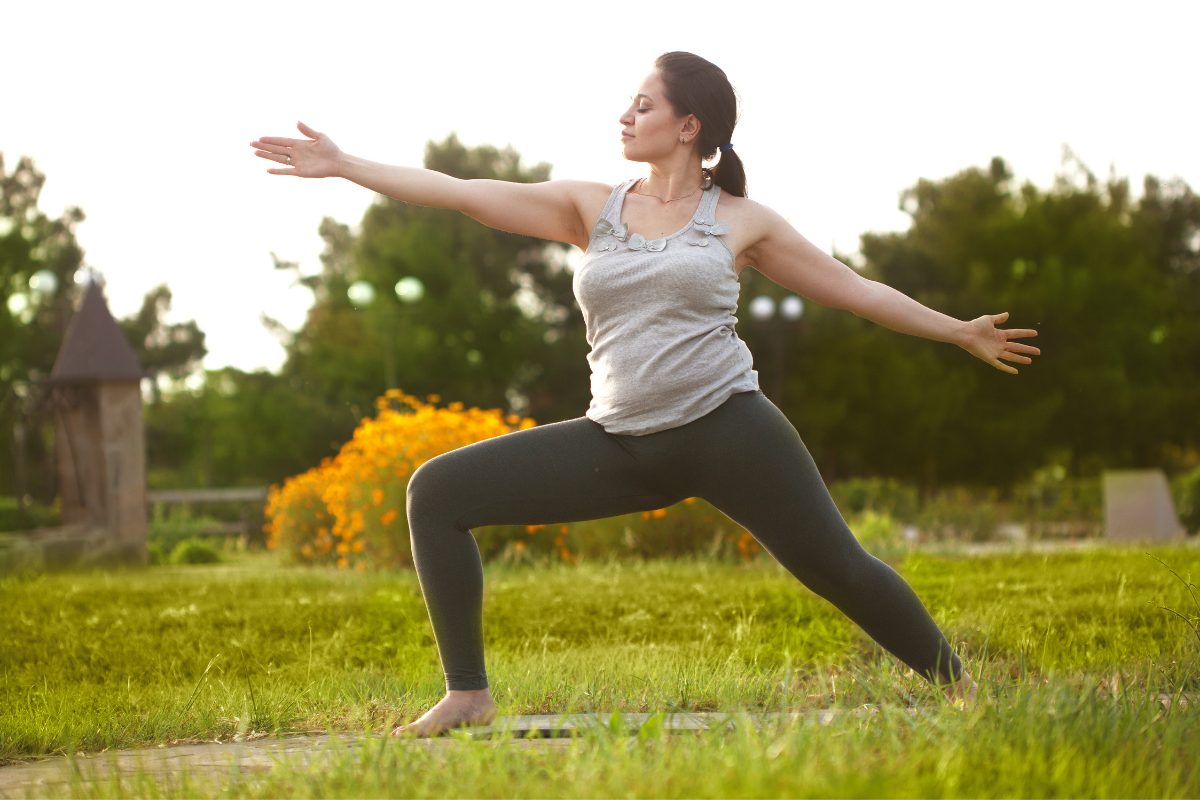
The word hatha comes from Sanskrit. “Ha” means sun and “tha” means moon. Traditional hatha yoga balances these opposing energies through physical postures and breath work. It’s the umbrella term covering most physical yoga styles you’ll find in studios today. With 89% of yoga practitioners choosing hatha styles, you’re joining millions of people worldwide.
Adding Gentle Yoga modifications makes yoga more accessible.
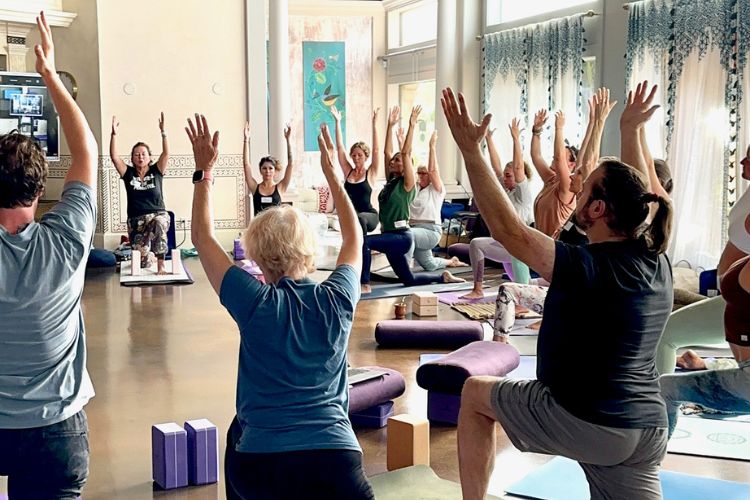
Adding “gentle” changes everything about how the practice unfolds. The pace slows down. Poses last longer. Teachers offer modifications for every single movement. You’ll spend more time on the floor than standing. And props become your best friends rather than signs of weakness.

Hatha and Gentle Yoga can service a wide audience of students:
Benefits of a Hatha and Gentle Yoga Practice:
Physical Benefits:
- Improved Flexibility and Range of Motion
- Enhanced Strength and Stability
- Better Posture, Alignment, Joint Health and Mobility
- Pain Management
- Stress Reduction and Anxiety Relief
Mental and Emotional Benefits:
- Stress Reduction and Anxiety Relief
- Improved Sleep Quality
- Enhanced Mind-Body Connection
- Mental Clarity and Focus
Social and Lifestyle Benefits
- Community Connection
- Sustainable Wellness Practice

Benefits of a Hatha and Gentle Yoga Practice:
Physical Benefits:
- Improved Flexibility and Range of Motion
- Enhanced Strength and Stability
- Better Posture, Alignment, Joint Health and Mobility
- Pain Management
- Stress Reduction and Anxiety Relief
Mental and Emotional Benefits:
- Stress Reduction and Anxiety Relief
- Improved Sleep Quality
- Enhanced Mind-Body Connection
- Mental Clarity and Focus
Social and Lifestyle Benefits
- Community Connection
- Sustainable Wellness Practice
Training Details
What You Will Learn
- Hatha and Gentle Yoga
- Chair Yoga
- Restorative Flow
- Yoga Nidra
- Joint Freeing Series
- Yoga for plus size bodies
- Pranayama and meditation
Students will gain greater confidence in offering these techniques through lessons in sequencing, presentation, class design, structured practicum, and guidance on finding their own intuitive sense and unique teaching voice. This course will bring you into a greater basic understanding of both Hatha and Gentle Yoga while honing your teaching skills, helping you to support a much broader range of students and offer a greater range of classes.
Program Format
Attendance Options: In‑person in Encinitas, CA or live online, or recorded sessions. Mix formats as needed.
Schedule: March 22-26, 2027; 8:30 a.m. to 6:00 p.m. Pacific Time.
Certification: 50‑Hour Hatha and Gentle Yoga Specialization Certificate upon completion. CEUs for Yoga Alliance available. 50 Hour course can be applied as an elective in the 300 hour Advanced Certification Training.
Faculty: Led by Flossie Park with guest faculty
 Flossie Park always considering herself as a student of life, Flossie has studied with numerous teachers throughout her lifetime. Flossie has dedicated her life to empowering herself and others through yoga, meditations, workshops, retreats, Crystal Bowl sound therapy and numerous other modalities. She has been actively involved in the wellness field for over 25 years developing programs that reach out to all walks of life. For ten years Flossie owned a yoga studio on the east coast where she developed and directed a successful School of Yoga. Through her Yoga Teacher Training programs and certifications, she has lovingly guided hundreds of students to step into living their passions and enriching their lives and the lives of others with the experience, wisdom and love of yoga.
Frequently Asked Questions
What is Gentle Hatha Yoga?
Gentle Hatha is a slower, supportive form of classical hatha. It uses simple sequencing, props, and mindful breath so a wide range of bodies can practice safely and comfortably.
Why become certified in Gentle Hatha?
Certification prepares you to serve people who are often left out of faster or stronger classes. You learn to offer inclusive, accessible yoga that truly meets students where they are.
Who benefits from Gentle Hatha classes?
Beginners, those who need less stressful classes, older adults, people with chronic pain, joint issues, anxiety, or limited mobility, plus anyone who feels intimidated in typical group classes. These are the students who most need a gentle approach.
Is there demand for Gentle Hatha teachers?
Yes. Studios, community centers, senior programs, corporate wellness and some healthcare settings all look for teachers who can safely guide gentle, accessible classes.
Do I need prior teaching experience?
Not necessarily. A background in yoga, movement, or caregiving helps, but the key qualities are patience, clear communication, and a genuine desire to support others.
What will I learn in Gentle Hatha training?
You learn to modify poses, use props effectively, sequence for safety and joint health, support the nervous system with breath, and create a calm, welcoming class environment.
How is Gentle Hatha different from Restorative or Yin?
Gentle Hatha includes light strengthening, mobility, and some standing poses. Restorative is fully supported and passive, Yin uses long passive holds for connective tissue. Gentle Hatha sits in the middle, steady and accessible.
Is Gentle Hatha appropriate for all levels?
Yes. It is especially helpful for those new to yoga, returning after time away, or managing physical limitations, and it can still be deeply beneficial for more experienced students.
What makes teaching Gentle Hatha meaningful?
You help people move, breathe, and trust their bodies again. Many students say gentle classes are the first time they have truly felt that yoga was meant for them.