
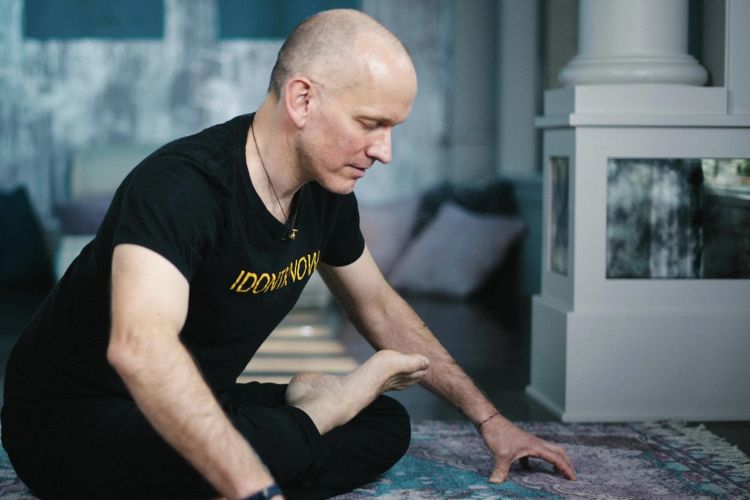
Yin Yoga is a long hold practice designed to bring balance back to a yoga culture that often leans hard toward strong, effort based movement.
Yin and Yang are not things. They are descriptions. Every thought, sensation, emotion, and practice contains both. In Yin Yoga, you learn to see that directly. Even the most “yin” moment contains a yang aspect, and any yang moment can reveal yin. This is a way of understanding experience, not a label or identity.
The term Yin Yoga emerged because Paulie Zink and Sarah Powers recognized an imbalance in the yoga communities they were part of. There was plenty of strength, heat, and muscular effort, and very little yielding. They did not name it Yin to make a separate category of yoga. They named it to bring the missing side back into the room. Yin Yoga was never meant to stand alone. It belongs in a wider practice life that includes other forms of yoga.
In this immersion you will learn the method as it is practiced in this lineage. You will learn how to guide the 3 phases of every posture, how to teach exploration without turning it into “wrong” or “right,” how to work with sensation and breath without forcing outcomes, and how to use rebound as the place where the practice lands and integrates.
What you will learn in Yin Yoga Training:
Yin and Yang as a way of seeing
- Yin and Yang as descriptions of all things, not powers or separate forces
- How any Yin or Yang aspect can be divided again and again as inquiry
- The 5 principles of Yin and Yang, including how they transform into each other
- How the practice moves through phases from more Yang to more Yin
The 3 phases of Yin Yoga
- Exploration phase, finding the version that fits your body
- Still hold phase, settling into time and reducing unnecessary effort
- Rebound phase, choosing the position that creates the least stress in your body
- How to guide time so only one phase is explicitly timed and the others stay responsive
Sensation and the meaning of edge
- How to teach mild to moderate sensation as a baseline
- Different edges and how to recognize when someone has gone too far
- Using the rebound as the best feedback tool
- What to do when someone feels numbness, sharpness, or nerve like signals
Breath in Yin Yoga
- Natural breath as the baseline
- How shapes change the diaphragm and breathing space
- How to teach “release control” without making it a rule
Archetypes and variations
- The 5 archetypes and what each one targets
- How variations live inside archetypes
- How to teach “target area” without creating a goal
- Side to side differences, asymmetry, and how to normalize them
Language and choice in the room
- How to guide exploration so students trust their own body
- Teacher as guide, student as decision maker
- How to offer options without overwhelming people
- How to support emotional release and integration within your scope of practice
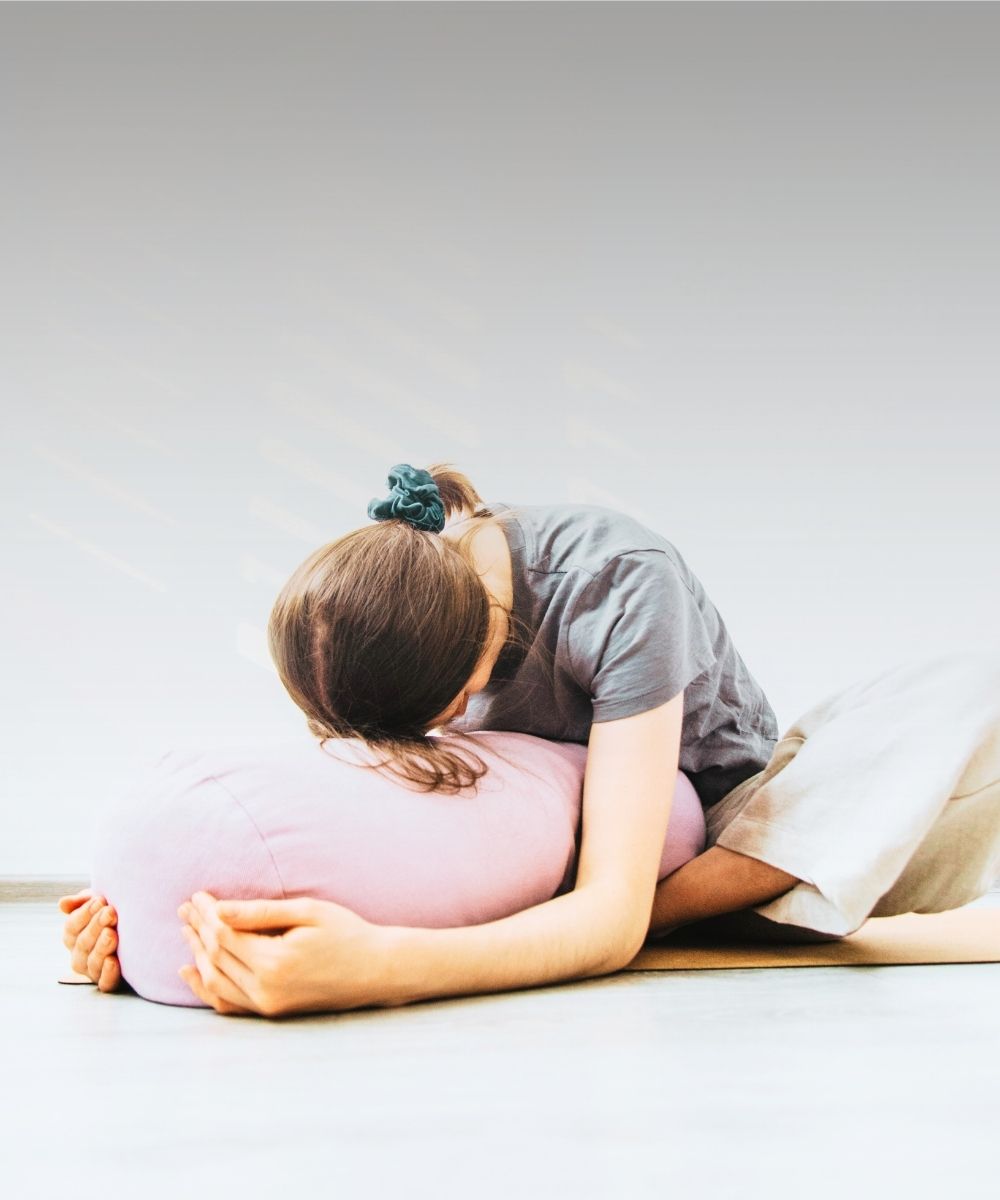
What you will learn in Vinyasa Yoga Training:
Yin and Yang as a way of seeing
- Yin and Yang as descriptions of all things, not powers or separate forces
- How any Yin or Yang aspect can be divided again and again as inquiry
- The 5 principles of Yin and Yang, including how they transform into each other
- How the practice moves through phases from more Yang to more Yin
The 3 phases of Yin Yoga
- Exploration phase, finding the version that fits your body
- Still hold phase, settling into time and reducing unnecessary effort
- Rebound phase, choosing the position that creates the least stress in your body
- How to guide time so only one phase is explicitly timed and the others stay responsive
Sensation and the meaning of edge
- How to teach mild to moderate sensation as a baseline
- Different edges and how to recognize when someone has gone too far
- Using the rebound as the best feedback tool
- What to do when someone feels numbness, sharpness, or nerve like signals
Breath in Yin Yoga
- Natural breath as the baseline
- How shapes change the diaphragm and breathing space
- How to teach “release control” without making it a rule
Archetypes and variations
- The 5 archetypes and what each one targets
- How variations live inside archetypes
- How to teach “target area” without creating a goal
- Side to side differences, asymmetry, and how to normalize them
Language and choice in the room
- How to guide exploration so students trust their own body
- Teacher as guide, student as decision maker
- How to offer options without overwhelming people
- How to support emotional release and integration within your scope of practice
This training is for you if you:
Why Yin Yoga is so powerful
Many people live with a lot of doing. Yin Yoga gives a lived experience of staying, listening, and letting the effects of practice unfold over time.
The exploration phase teaches self study and choice. The still hold phase teaches duration and release of extra effort. The rebound teaches integration. This is where many students feel the most, not because more is happening, but because less is required.
Over time, Yin Yoga changes how people relate to sensation, discomfort, and control. It also balances practices that are heavy on strength and drive by training the capacity to yield.
You will leave this immersion with a clear understanding of how Yin Yoga works in this lineage and how to teach it in a grounded, respectful way.
Training Details
Training format and experience
- Guided Yin practices so you feel the phases in your own body
- Archetype breakdown with prop options and variations
- Teaching labs and practice teaching with feedback
- Time for questions, discussion, and integration
- Support materials you can return to as you begin to teach
Attendance Options: In‑person in Encinitas, CA or live online, or recorded sessions. Mix formats as needed.
Schedule:
Foundations 25 hours: October 9-11, 2026, 8:30 a.m. to 5:30 p.m. Pacific Time.
Next Level 25 hours: October 12-14, 2026, 8:30 a.m. to 5:30 p.m. Pacific Time.
Certification: 50 Hour Certificate upon completion of both courses. CEUs for Yoga Alliance available. 50 Hour course can be applied as an elective in the 300 hour Advanced Certification Training.
Faculty: Joe Barnett, ERYT-500
Joe has been practicing and teaching many forms of yoga for 20 years. For 10 years, he has been traveling nationally and internationally offering lectures, workshops and teacher trainings on specifically Yin Yoga and Chakra Meditation.
Joe is a senior student and primary teaching assistant of Paul Grilley, a true Yoga Scientist and founder of Yin Yoga. After several years of apprenticing under Paul, Joe began roaming the globe to spread the word of his teacher’s work.
“Joe Barnett has been our friend and assistant for many years. He has two qualities that make him an excellent presenter: he knows the anatomical principles and he relates to people in a sympathetic manner. His presentations are unhurried, hands on demonstrations, this is the easiest way to absorb these ideas.” ~ Paul and Suzee Grilley
The course is broken into two 25 hour modules. Take the foundation course or both to get a 50 Hour Certification:
Foundation Course (25 hours): $550
Next Level Course (25 hours): $550
50 Hour Course (Foundation & Next Level): $1100
Sign up by 9/4 to save $100 off the Foundations course or $200 the 50 Hour Course
Frequently Asked Questions
Why become certified in Yin Yoga?
Certification prepares you to confidently teach a yin class. You’ll gain the skills to properly setup the poses for the class, sequence the flow and teach from the heart.
Is there demand for Yin Yoga teachers?
Yes. Yin yoga continues to grow in popularity as more and more yoga studios are offering this style of yoga.
Do I need prior teaching experience to take this Yin Yoga Training?
Not necessarily. A background in yoga is helpful. The training will be a mix of yoga teachers and yogis immersing themselves in study of this modality.
What is Yin Yoga?
Yin Yoga is a long hold practice with three phases in every posture: exploration, still hold, and rebound. It uses time, shape, and sensation to train yielding and integration.
Is Yin Yoga the same as “pure Yin”?
No. There is no such thing as pure Yin. Yin and Yang are descriptions of everything, and Yin Yoga is a way of bringing balance into a wider practice life.
How is Yin Yoga different from Restorative Yoga?
Yin Yoga includes sensation and an exploration phase to find the right fit. Restorative Yoga uses more support and aims for minimal sensation so the body can rest deeply.
What is the rebound?
The rebound is the pause after a long hold where you take the position that creates the least stress in your body. For many people, this is where the deepest settling and integration happens.
How do I know if I went too far?
The rebound gives the clearest information. Mild achiness that fades can be normal. If pain continues or increases after you come out, you have gone too far and should reduce intensity next time.
Do I control the breath in Yin Yoga?
Often the baseline is natural breath. If you notice breath holding, you can intentionally inhale and then release with a long exhale or sigh, then return to unforced breathing.
Is it okay to move into a counter pose between shapes?
Some people will want to, and sometimes it is appropriate. The usual approach is to come out slowly and enter rebound first so the effects can settle. Students ultimately make the choice for their own body.
Is Yin Yoga meant to be a complete practice by itself?
In this lineage, Yin Yoga was named to restore balance in communities that were doing a lot of strong, effort based practice. It pairs well with other kinds of yoga rather than replacing them.
How is Yin Yoga different from stretching at home?
Yin Yoga is guided by phases, timing, archetypes, and deliberate choices around sensation. A teacher held container helps students explore safely, stay long enough for effects to unfold, and then integrate in rebound.