
In this article
- Why is it so hard to be gentle with ourselves?
- Who is Gentle Hatha Yoga for?
- What makes a yoga class “gentle”?
- Types of gentle yoga classes you might see:
- Breath as the foundation of a gentle yoga class
- Why props matter:
- What does a Gentle Hatha sequence include?
- Why practice Gentle Hatha Yoga?
- An invitation to slow down
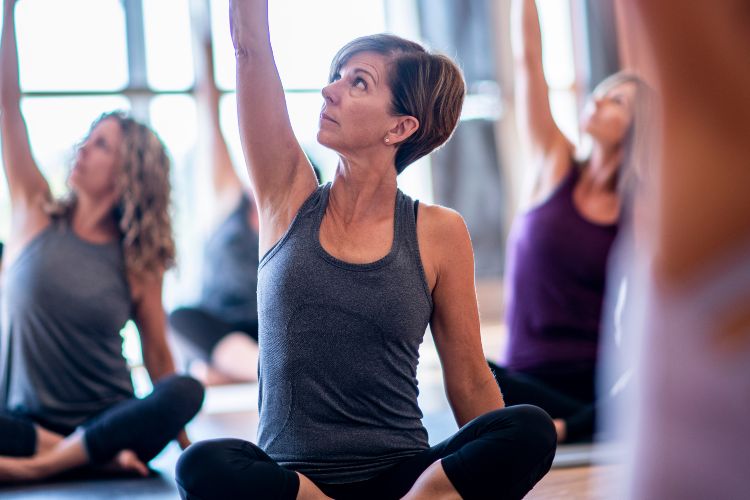
There is a kind of yoga that does not ask you to be flexible, strong, or experienced. It simply asks you to show up and breathe.
Gentle Hatha Yoga is for everyone and every body. It is especially for people who think, “Yoga is not for me,” or “I can’t do that.” In this style, movements are slow and mindful, and every shape is supported with breath and awareness. No special ability is required. Curiosity is enough.
Why is it so hard to be gentle with ourselves?
Many of us live inside a constant push to do more and keep up. Work, family, and daily responsibilities pile up. Rest starts to feel like a luxury or even something to feel guilty about.
Over time, this pressure keeps the nervous system in a state of alarm. We might survive like this for a while, but we do not truly thrive. Gentle yoga offers a clear, practical pause. It is a space where you do not have to perform, prove, or achieve. You are allowed to slow down and feel what is actually happening inside.
Who is Gentle Hatha Yoga for?
Gentle yoga can support:
- Complete beginners
- People who feel stressed, overwhelmed, or “on” all the time
- Seniors and older adults
- Anyone recovering from injury or living with limited mobility
- People who are pregnant and need a safer, slower approach
- Experienced practitioners who want a softer practice
This is not a “less than” version of yoga. It is a wise and compassionate way to practice.
What makes a yoga class “gentle”?
Teachers often ask what truly defines a gentle class. It is less about a specific sequence and more about how the class is paced and guided.
A Gentle Hatha Yoga class usually includes:
- Slower movements
- Simple transitions
- Clear, easy to follow instructions
- Use of props and modifications
- Poses chosen for accessibility, not intensity
- Attention to how each posture feels, not how it looks
- Respect for individual limits
- Time at the end to rest and absorb the practice
The main shift is this: instead of pushing for a challenge, you are invited into awareness.
Types of gentle yoga classes you might see:
Under the umbrella of gentle yoga, you may find offerings such as:
- Joint Freeing Series
- Yoga on the Wall
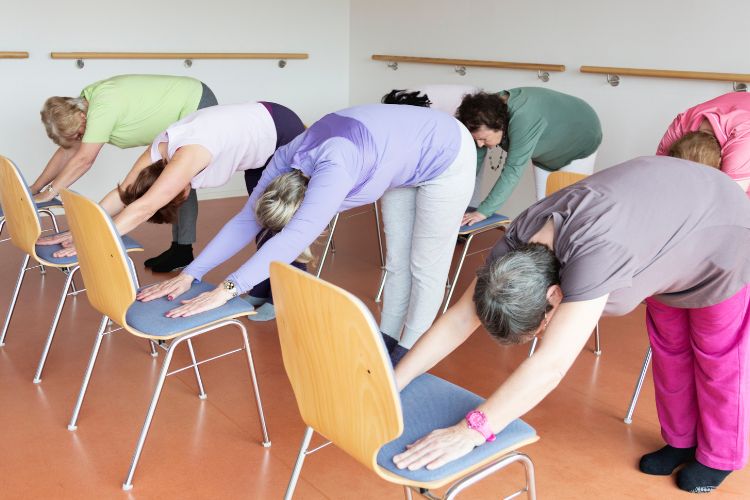
- Chair Yoga
- Gentle Flow
- Gentle Flow with Restorative
- Restorative Yoga
All of these styles focus on support, ease, and steadiness.
Breath as the foundation of a gentle yoga class
In Gentle Hatha Yoga, breath is not an afterthought. It is the base of the whole practice.
You might be guided to:
- Inhale as you lengthen or lift
- Exhale as you soften or release
This simple coordination turns movement into a kind of moving meditation. When the breath becomes slower and more steady, the parasympathetic nervous system begins to engage. This is the part of your system that helps you rest, digest, and repair. Muscles let go, the jaw softens, and the mind starts to quiet.
Many students are surprised by how different they feel after even a short, gentle practice with focused breathing.
Why props matter:
Props are not a sign of weakness. They are tools that make yoga more personal and more effective.
With blocks, straps, blankets, bolsters, or a chair, you can:
- Support healthy alignment
- Create more comfort in joints
- Experience a stretch without strain
- Stay in poses longer without fatigue
Props function like extensions of your body. They help you meet the pose where you are, rather than forcing your body to meet a fixed idea of the pose.
What does a Gentle Hatha sequence include?
A gentle class usually touches the whole body in a clear, organized way. For example, a typical class might look like this:
- Centering and warm up
Often on the back or in a comfortable seated position. You notice the breath, release tension, and wake up the spine, shoulders, and hips.
- Upper body movements
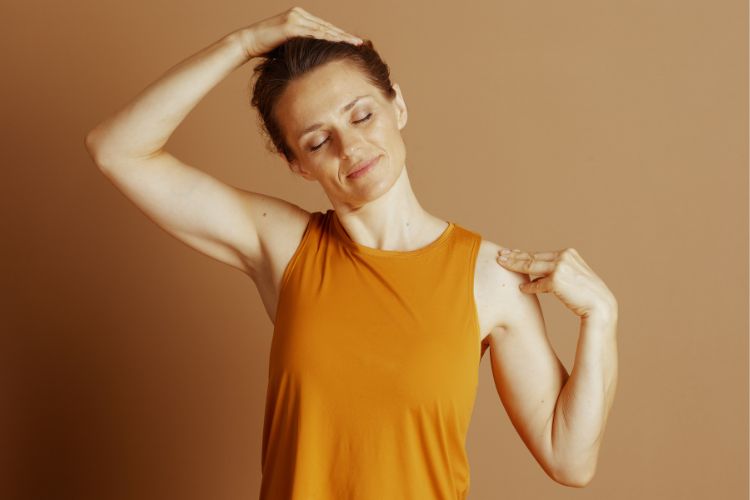
Gentle work with the neck, shoulders, chest, upper back, hands, and fingers. This can include small movements, light stretches, and simple opening shapes.
- Standing poses (optional)
A few basic postures that build strength and balance without long holds or complex transitions.
- Seated and floor poses
Hip openers, leg stretches, and simple twists. These are done at a measured pace, with attention to comfort and breath.
- Integration and final relaxation
Time at the end to lie down or sit comfortably, letting the body and mind absorb the effects of the practice. This is where many people feel their first real taste of calm in a long time.
Why practice Gentle Hatha Yoga?
Gentle yoga supports many layers of health.
Physical benefits:
- Increased strength and stability, at a level that feels manageable
- Better flexibility and range of motion
- Improved posture and alignment
- Healthier, more mobile joints
- Support for pain management and recovery
Mental and emotional benefits:
- Reduced stress and anxiety
- Better sleep
- A clearer sense of what you feel in your own body
- Improved concentration and presence
Lifestyle and community benefits:
- A practice you can sustain over time, even as your body changes
- A welcoming space where you feel seen and included
- A way to care for yourself that does not require extreme effort
Gentle yoga reminds you that you do not have to live in constant tension. You are allowed to feel safe inside your own skin.
An invitation to slow down
Many of us spend years in a “fight or flight” state without even noticing it. Gentle Hatha Yoga is an invitation to step out of that pattern, even for an hour. When you give your body and mind time to reset, you can hear yourself more clearly. From there, you can make choices that move you toward real well-being, not just getting through the day.
If you feel called to explore this more deeply join us for our annual 50-hour Gentle Hatha Yoga Teacher Training. Click here for all the details.
Teaching gentle yoga is one of the most meaningful parts of my work, and you do not have to be a yoga teacher to attend. Many students join simply to deepen their own understanding and practice.
Let us lighten the load we carry and reclaim a kinder way of living in our bodies.
Teach with greater accessibility
Hatha and Gentle Yoga
Explore a thoughtful approach to Hatha, gentle yoga, and adaptable teaching.
Explore Hatha and Gentle Yoga