

In this article
- Key Takeaways
- What Is a Restorative Yoga Sequence?
- Sequence Structure
- What’s the single most important prop for restorative yoga?
- Essential props for a restorative yoga practice
- Practicing restorative yoga while traveling
- Household substitutes for restorative yoga props
- How to think about substitutes?
- Common mistakes beginners make in restorative yoga
- The biggest misconception about restorative yoga
- FAQs
- What is a restorative yoga sequence?
- How long should I hold each restorative yoga pose?
- What props do I need for restorative yoga?
- Is restorative yoga good for beginners?
- What is the difference between restorative yoga and yin yoga?
- How often should you do restorative yoga?
- Can you do restorative yoga every day?
- What are the best restorative yoga poses for sleep?
- How do I create my own restorative yoga sequence?
- What are the benefits of restorative yoga?
- How long should a restorative yoga practice be?
- What is the best time of day for restorative yoga?
- Can you do restorative yoga without props?
- What should I wear for restorative yoga?
- Is restorative yoga good for stress relief?
Restorative yoga sequence invites your breath and your mind to move into a slower cadence, even when life rushes you forward. What if deep rest could fit inside a real schedule? Here you’ll find practical pathways to unwind fully, with sequences that meet you where time allows.
Key Takeaways
- Restorative yoga activates the parasympathetic nervous system; 5–20 minute holds support a deep relaxation response
- Time of day matters: morning sequences gently awaken energy, evening sequences prepare the body and mind for sleep
- Props encourage complete release, with travel-friendly options for minimal equipment
- Downloadable Restorative sequence PDF available for morning, evening, travel and a 60-minute restorative practice
- Start with 3–4 poses if new, gradually building to 8–10 as stillness becomes familiar
What Is a Restorative Yoga Sequence?
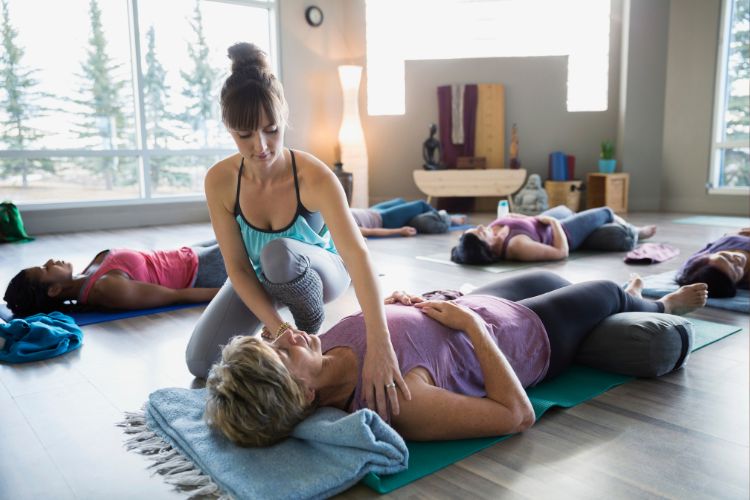
A restorative yoga sequence is a quiet form of yoga practice designed to help your body settle into deep rest through fully supported poses, long holds, and gentle awareness of your breath. Unlike more active styles, restorative yoga invites the parasympathetic nervous system to lead, allowing the relaxation response to unfold naturally through deep breathing and stillness on the mat.
In a restorative yoga sequence with props, shapes like child’s pose, bound angle pose, easy pose, and savasana are supported with a pillow or bolster, blocks and blankets so your chest, your hips, and your knees can soften without effort. You breathe here, allowing your mind to settle and your nervous system to unwind. Holds typically last five to twenty minutes, giving your body time to release layers of tension that shorter practices often miss.
While Yin yoga also moves slowly, it focuses more on passive stretching and gentle stress to tissues, whereas restorative yoga prioritizes complete comfort and support. The intention is not to stretch deeply but to create conditions where your breath becomes smooth and your whole system can recalibrate.
Sequence Structure
For someone new to restorative yoga, I recommend a sequence structure that moves from grounding to gentle opening to integration. Begin with a simple arrival on the mat, often in easy pose or a supported recline, inviting awareness to your breath and allowing the nervous system to settle. From there, include one or two shapes that softly open the hips or chest, such as supported child’s pose or bound angle pose, followed by a quiet rest in savasana. This progression helps your body feel safe first, then gradually unwind, rather than dropping straight into stillness.
When deciding which poses to include, I consider what will best support the parasympathetic nervous system and create a sense of ease. Poses are chosen for comfort, accessibility, and the ability to be held without strain. I look at common areas of holding like the jaw, shoulders, chest, and hips, and select shapes that allow gravity and props to do the work. The order usually moves from more contained and inward shapes toward more open, spacious ones, then back to deep rest, so your mind and body can integrate the effects of the practice.
Time of day can gently guide the tone of a sequence. In the morning, restorative yoga can be slightly more uplifting, with supported chest opening and a sense of quiet alertness that prepares your breath and your mind for the day ahead without overstimulation. In the evening, the emphasis shifts toward longer holds, dimmer light, and shapes that encourage letting go, helping the nervous system downshift toward sleep. Evening sequences often include more forward folds or cocooning positions that signal to your body that it is safe to release the day.
Ultimately, the structure is less about a fixed formula and more about listening. A thoughtful restorative sequence meets you where you are, whether you need gentle awakening in the morning or deep unwinding at night, and uses simple, well-supported poses in a compassionate order that honors your energy and your capacity for rest.
Download your FREE Restorative Yoga Sequence PDF here!
What’s the single most important prop for restorative yoga?
If someone can only afford one item, a bolster is the most supportive and versatile prop for restorative yoga. A good bolster supports your body in ways that allow muscles to soften, your breath to deepen, and the parasympathetic nervous system to settle. It can be used under the spine for gentle opening, under the torso in child’s pose, beneath the knees in savasana, or to support the hips in bound angle pose. One well-placed bolster can transform a posture from “holding” to truly resting.
The best household substitute I’ve seen students use is a firmly rolled blanket or a stack of pillows wrapped in a towel or sheet so it holds its shape. Some have used couch cushions, a folded duvet, or even a tightly rolled sleeping bag. What matters most is stability and comfort so your body can trust the support and release effort.
Essential props for a restorative yoga practice
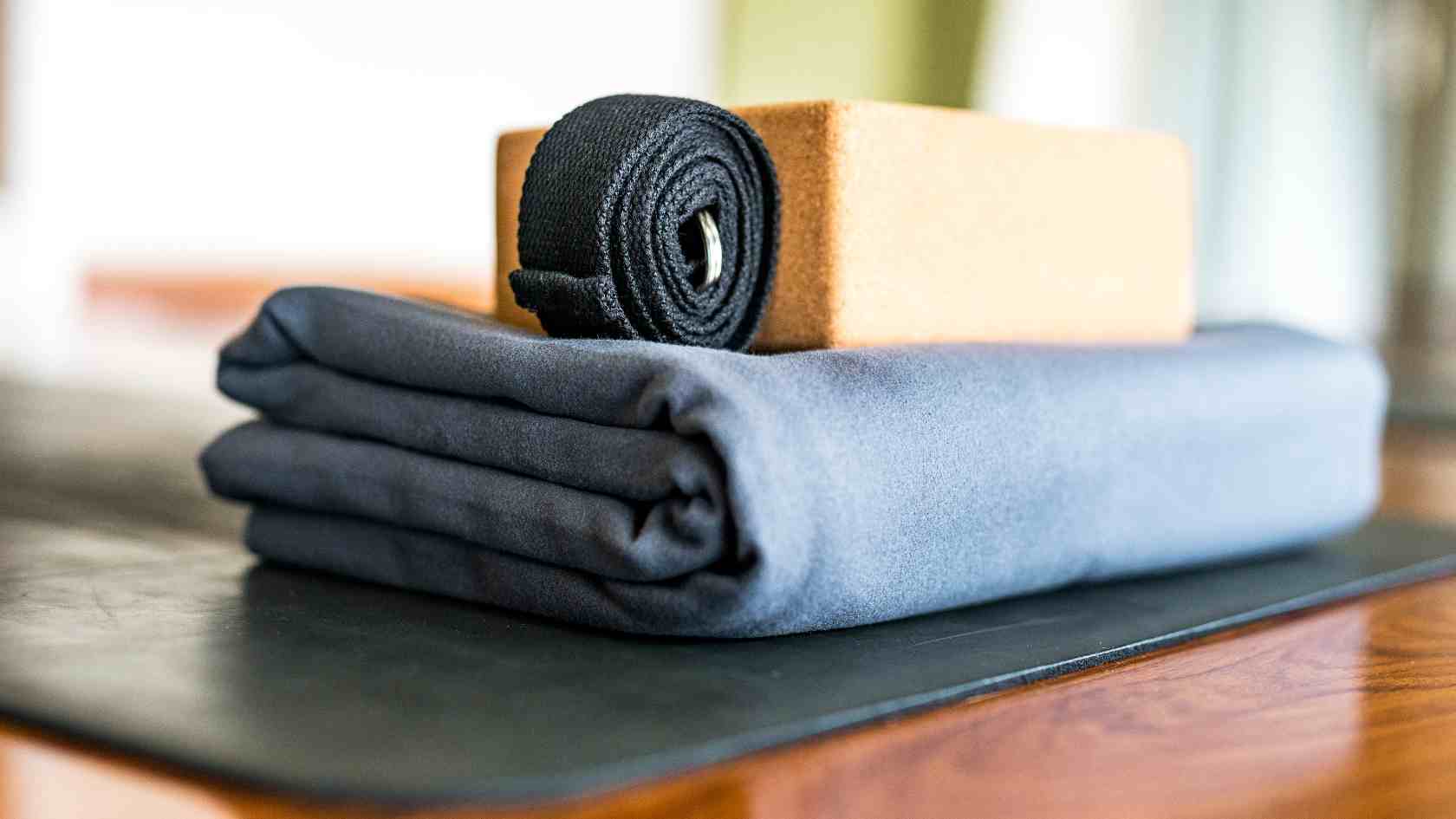
While you can begin simply, these are the most commonly used supports:
- Bolster (or firm pillows/rolled blankets)
- Yoga blankets for warmth and subtle adjustments
- Blocks to support knees, arms, or head
- Strap to reduce strain in certain shapes
- Eye pillow or light covering to soften sensory input
- Mat for grounding and comfort
Each prop helps reduce muscular effort so the nervous system can shift toward rest and the relaxation response can unfold more easily.
Practicing restorative yoga while traveling
When you’re away from home and cannot bring a full set of props, creativity becomes part of the practice. Hotel pillows can substitute beautifully for a bolster, folded towels can act as blankets or small supports, and a suitcase or backpack can serve as a stable prop under the legs or feet. A scarf, belt, or robe tie can replace a strap. Even practicing on a carpet or folded blanket instead of a mat works well.
Travel can actually deepen restorative yoga because it invites simplicity. Choose just a few supported shapes like child’s pose, legs supported on the bed, or a reclined rest with pillows, and focus on your breath rather than perfection. The essence of restorative yoga is not the quantity of props but the quality of support and the willingness to let your body feel held wherever you are.
Your FREE Travel Friendly Restorative Yoga Sequence PDF here!
Household substitutes for restorative yoga props
Bolster substitute
A firmly rolled blanket, folded duvet, or several bed pillows stacked and wrapped in a sheet works beautifully. Couch cushions are excellent because they are dense and hold shape, making them ideal for child’s pose or under the spine.
Blankets
Any throw blanket, comforter, or quilt can provide warmth and subtle support under your body, behind your head, or over your chest to help the nervous system feel held.
Blocks substitute
Stacks of books, sturdy boxes, or firm cushions can support your knees, hands, or head. Choose items that feel steady so your body can relax without guarding.
Strap substitute
A belt, scarf, robe tie, or long towel can replace a yoga strap for gentle support without strain.
Eye pillow substitute
A folded washcloth, small towel, or even a soft T-shirt placed lightly over the eyes can reduce stimulation and encourage your mind to settle.
Mat substitute
A carpet, rug, or folded blanket works well if you do not have a yoga mat. The goal is simply a comfortable, grounded surface.
How to think about substitutes?
The guiding principle is not perfection but trustworthy support. Ask: does your body feel safely held? Can your breath deepen without effort? When props or substitutes remove the need to “hold yourself up,” the parasympathetic nervous system can shift toward rest and the relaxation response can arise naturally.
At home, take advantage of what you have. You can build a nest that invites stillness — layering pillows under your knees, wrapping yourself in blankets in savasana, or resting your chest on cushions in a supported forward fold. Restorative yoga is ultimately about creating conditions where your body feels supported enough to let go.
Common mistakes beginners make in restorative yoga
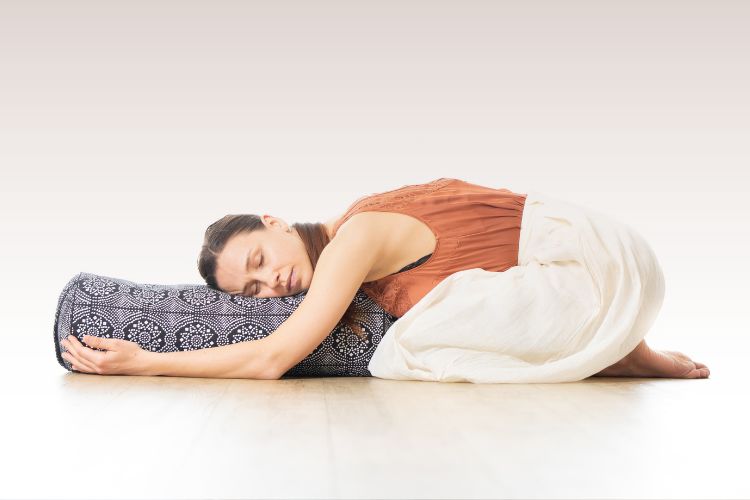
One of the most common mistakes is not using enough support. Many people try to “do” restorative yoga with minimal props, holding themselves subtly in the pose instead of allowing the body to be fully held. When your body is still working, even quietly, the nervous system does not fully shift into the parasympathetic state that restorative yoga is meant to cultivate. The invitation is to adjust until your breath feels easy and your muscles can soften completely.
Another frequent pattern is treating restorative yoga like gentle stretching. Students sometimes push for sensation or try to deepen a shape, especially if they are used to more active forms of yoga. In restorative yoga, the intention is not to stretch but to rest. The practice is about creating conditions where the relaxation response can arise, not about increasing flexibility.
Many beginners also rush through poses or shorten the holds because stillness can feel unfamiliar. The deeper benefits of restorative yoga often emerge after several minutes, when the mind settles and the body begins to unwind layers of tension. Learning to stay, even when it feels quiet or uneventful, is part of the practice.
Some people unintentionally stay mentally busy, planning or problem-solving instead of returning to their breath. Gentle anchors like feeling the support beneath you or noticing the movement of your breath can help guide your mind back toward presence.
The biggest misconception about restorative yoga
The most widespread misconception is that restorative yoga is “just lying around” or that it is only for people who are tired, injured, or not interested in more active practice. In truth, restorative yoga is a profound nervous system practice. It teaches the body how to shift out of chronic activation and into a state of repair, digestion, and deep integration.
Another misconception is that it should feel instantly peaceful. For some, slowing down can initially bring awareness to restlessness or stored tension. This is not a sign that the practice isn’t working; it is often a sign that the nervous system is learning a new pattern of safety and ease.
Over time, restorative yoga reveals itself as a subtle but powerful discipline, one that refines sensitivity to breath, deepens self-awareness, and supports resilience in ways that extend far beyond the mat.
Slowing down becomes the quiet answer to a world that asks you to hurry. Download the sequence that fits your time, even 20 minutes can awaken the parasympathetic response. Will you begin tomorrow with a morning reset or an evening unwind?
FAQs
What is a restorative yoga sequence?
A restorative yoga sequence is a gentle yoga practice of supported poses held for several minutes to help your body shift into deep rest. Using props, slow breathing, and stillness, it supports the parasympathetic nervous system and encourages the relaxation response, allowing your mind and body to unwind without effort or strain.
How long should I hold each restorative yoga pose?
Most restorative yoga poses are held between five and twenty minutes, depending on comfort and intention. Longer holds give your nervous system time to settle and allow deeper release. Beginners may start with shorter durations and gradually extend as their body becomes familiar with stillness and supported rest.
What props do I need for restorative yoga?
Common props include a bolster or firm pillows, blankets, blocks, and a strap. These supports allow your body to relax fully without muscular effort. Household items like folded blankets, couch cushions, or a belt can work just as well, as long as they create stable, comfortable support for longer holds.
Is restorative yoga good for beginners?
Restorative yoga is very accessible for beginners because poses are simple, slow, and fully supported. It does not require flexibility or strength and can help new students build body awareness and comfort with stillness. Starting with a few poses allows beginners to experience deep relaxation while learning to connect with their breath.
What is the difference between restorative yoga and yin yoga?
Restorative yoga focuses on complete support and nervous system relaxation, using props to eliminate effort. Yin yoga applies gentle stress to tissues through longer passive stretches to improve mobility. While both are slow, restorative emphasizes comfort and rest, whereas yin emphasizes sensation and gradual tissue adaptation.
How often should you do restorative yoga?
Many people benefit from practicing restorative yoga two to four times per week, especially during periods of stress or fatigue. Even occasional sessions can help regulate the nervous system. Consistency matters more than duration, and short practices can still support recovery, balance, and mental clarity over time.
Can you do restorative yoga every day?
Yes, restorative yoga can be practiced daily because it is gentle and designed to support recovery rather than create strain. Daily practice can help regulate stress, improve sleep, and maintain nervous system balance. Listening to your body and adjusting duration ensures the practice remains nourishing rather than excessive.
What are the best restorative yoga poses for sleep?
Supported child’s pose, reclined bound angle pose, legs supported on a chair, gentle forward folds, and savasana are especially helpful for sleep. These shapes calm the nervous system, encourage slow breathing, and signal safety to the body, making it easier to transition into rest and prepare for deeper sleep cycles.
How do I create my own restorative yoga sequence?
Begin with a grounding pose, add one or two gentle openings for the hips or chest, include a supported position for the legs or spine, and finish with savasana. Choose poses that feel comfortable and use enough support to relax completely. Let your breath guide the pacing and keep transitions slow.
What are the benefits of restorative yoga?
Restorative yoga can reduce stress, improve sleep, support digestion, and help regulate the nervous system. It encourages deep relaxation, emotional balance, and recovery from fatigue or overstimulation. Over time, regular practice can increase resilience, enhance mental clarity, and support overall well-being through consistent nervous system regulation.
How long should a restorative yoga practice be?
A restorative yoga practice can range from twenty minutes to an hour or more. Even short sessions can activate the relaxation response, while longer practices allow deeper unwinding. The ideal length depends on your schedule and needs, with consistency being more important than total duration.
What is the best time of day for restorative yoga?
Restorative yoga can be practiced any time of day. Morning sessions support gentle awakening and clarity, while evening practices help release tension and prepare the body for sleep. Choosing a time that feels sustainable and supportive allows the practice to become a steady part of your routine.
Can you do restorative yoga without props?
Yes, restorative yoga can be practiced without traditional props by using pillows, blankets, or other household items for support. The key is creating comfort so your body can relax fully. Even minimal support can allow the nervous system to settle and the practice to remain effective.
What should I wear for restorative yoga?
Wear soft, comfortable clothing that allows you to stay warm and relaxed during longer holds. Layers are helpful because body temperature can drop during deep relaxation. Choose fabrics that feel soothing on your skin and avoid anything restrictive so your breath and body can move naturally.
Is restorative yoga good for stress relief?
Restorative yoga is widely recognized as an effective practice for stress relief because it activates the parasympathetic nervous system and encourages deep breathing. By slowing the pace and supporting the body, it helps reduce tension, calm the mind, and create a sense of ease that can carry into daily life.
Chiara Stella writes and teaches from a place of deep listening, where intuition and expression meet. Her work feels like a gentle invocation, inviting us to remember the living thread that connects body, breath, and soul. Through her exploration of Sacred Sound, metaphysics, pranayama, astrology, shamanic wisdom, and Ayurveda, she weaves practices that help people return to their inner knowing and honor the unfolding of their soul’s journey. Her offerings are both a refuge and a doorway, guiding others to meet themselves with tenderness and clarity.

Chiara Stella’s style is intuitive and from her heart, reminding us of the interconnectedness of all of life. Her offerings are a loving prayer, a ritual to dive deeper into the body and awaken inner wisdom. She loves helping people connect to their own inner knowing, remembering their Souls journey. Also studying Sacred Sound, Metaphysics, Pranayama, Astrology, Shamanism, and Ayurveda she infuses these teachings in all of her classes.
Learn the art of restoration
Restorative Yoga
Explore how restorative practice supports rest, regulation, and thoughtful teaching.
Explore Restorative Yoga