
(And should I practice Yin Yoga?)
What Yin Yoga Actually Is
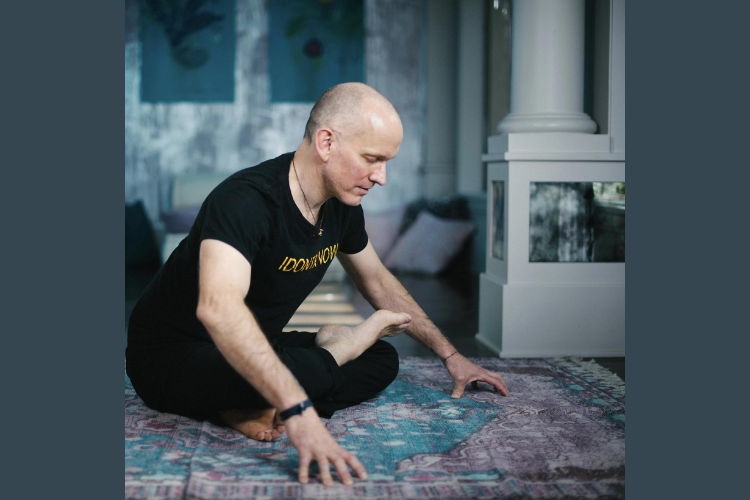
Yin looks simple. You take mostly floor-based shapes, stay for time, and shift attention from movement to sensation. The practice invites a moderate, sustainable stress in deeper connective tissues such as fascia, ligaments, and joint capsules while the mind practices receptivity. This is not a replacement for stronger yang practices. It is a complement, a balancing counterpart, he explains.
The Soul of Yoga has learned Yin Yoga from Joe Barnett, who travels from Tucson every year to share his teaching with us. Joe’s teacher, Paul Grilley, has a functional approach which is at the heart of how Joe teaches. Archetypes like Shoelace, Dragonfly, Caterpillar, Saddle, and Twists direct you toward target areas rather than perfect shapes. Every body is different, so students adapt the form to land sensation in the intended region without strain. This functional lens is what makes Yin accessible and transformative.
Roots and Lineage of Yin Yoga
Joe never lingers on lineage for its own sake, but it matters. Long-held postures and quiet, meditative approaches can be found in both Indian and Chinese traditions. Yogis sat in stillness for extended periods as part of meditation and pranayama. Taoist practitioners used long-held floor postures to open channels of energy and cultivate internal balance. These older roots remind us that Yin is not new, even if the modern name is.
In the modern era, Paulie Zink brought forward a Taoist-inspired system of postures that blended martial arts with yoga. Paul Grilley, drawing on Zink’s work and his own study of anatomy and Taoist thought, distilled Yin into a functional, accessible practice for a wide range of students. Sarah Powers added the language of balance, framing Yin as a complement to more active styles and integrating it with mindfulness and Buddhist practice. Bernie Clark carried the functional approach further, building a body of resources that highlight anatomy, skeletal variation, and practical teaching for real people.
The goal was never to trademark a style. The goal was discovering and expressing true balance. That is what I witnessed in Joe’s room: balance between effort and ease, science and spirit, teaching and direct experience.
Why the Longer Holds in Yin Yoga
Connective tissues are viscoelastic, which means they adapt over time when placed under a steady, modest load. In Yin, that load is the gentle stress your body weight creates in a posture. When you stay for minutes rather than seconds, tissues show what researchers call creep and stress relaxation, while the nervous system has time to downshift. This is why Yin favors longer holds. It is not about following a rule or chasing a number. It is about giving tissues and the mind the time they need to respond. Joe teaches this with intention, always emphasizing that time and sensation should be personalized and that safety comes first.
Where Yin Yoga Fits in a Full Practice Life
Great teachers across lineages encourage both yin and yang work. Sarah Powers, a pioneer in Yin, often describes the pairing as a practical balance: Yin cultivates quiet, joint health, and attentional steadiness, while yang practices build strength, circulation, and heat. Together, they create a cycle of resilience. Students find that each supports the other over time.
How Yin Yoga and Restorative Yoga Are Not the Same
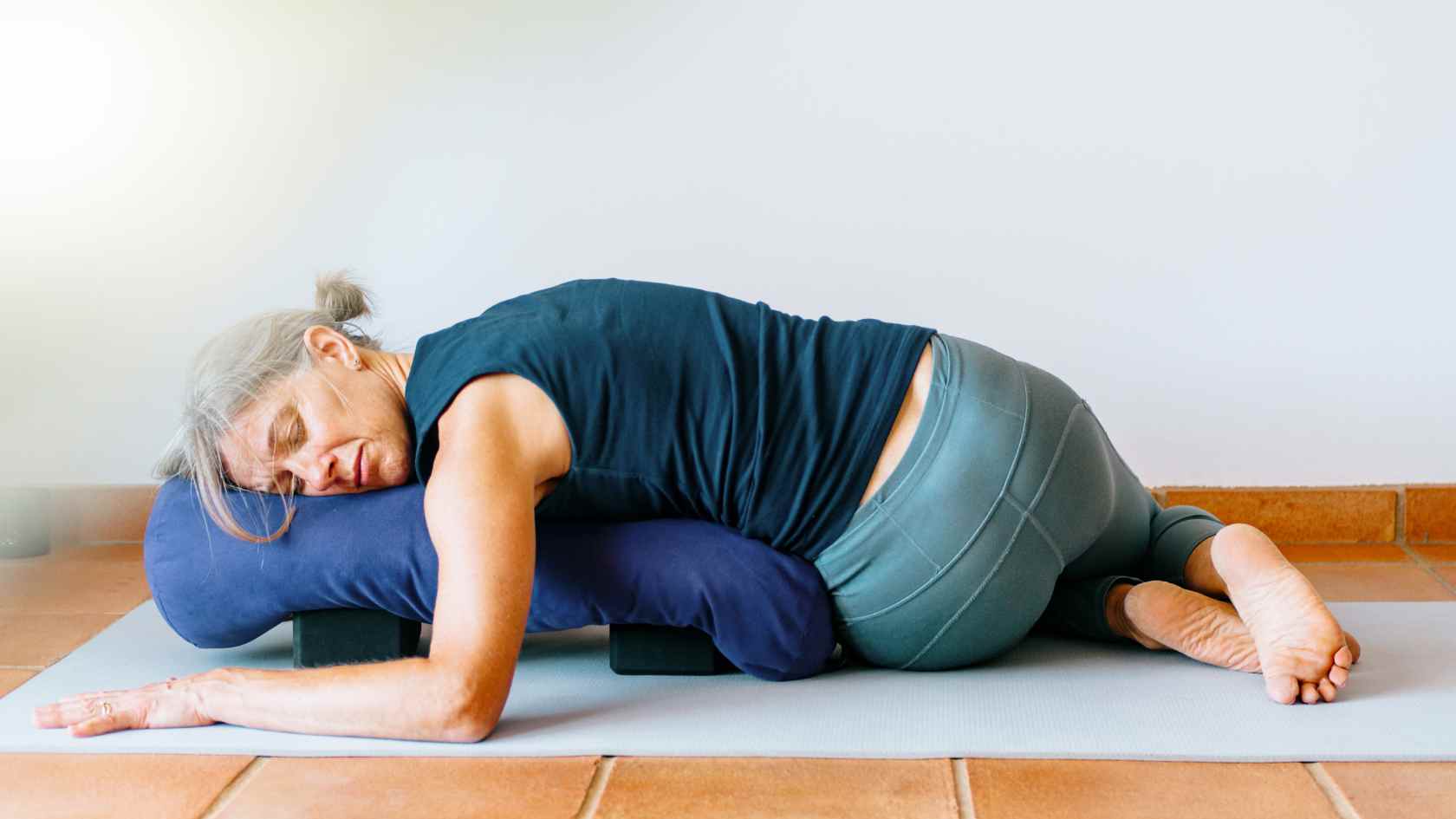
Restorative practice is about maximum support with minimal stress. The body is cushioned and held so that effort can fall away and the nervous system can rehearse deep rest. You are not looking for stretch or load. You are practicing what it feels like to be completely supported.
Yin, on the other hand, applies a modest and sustainable stress at a clear edge, then invites real rest in the rebound. In Yin you are not forcing or collapsing, but choosing a shape where gravity and time create gentle stress in the deeper connective tissues. The pose is not the end of the story. The rebound is where the body integrates what happened, often with a wave of release or quiet reorganization.
Both Restorative and Yin are slow, quiet practices. Both can use props to make the experience accessible. What makes them distinct is their intention and the way tissues are loaded. Restorative takes you toward complete ease so the nervous system can drop into profound rest. Yin takes you to a sustainable edge so tissues and the nervous system can adapt, then gives you real rest on the other side.
Intention and Load
Restorative: Prop supported shapes that eliminate strain so muscles can fully let go and the nervous system can settle into a rest and digest state. The pose is arranged so gravity and props do the work while you receive. Expect long, comfortable holds with very little tissue stress.
Yin: Floor based shapes held for time to place a modest, sustainable load on deeper connective tissues such as fascia, ligaments, and joint capsules while attention stays receptive. Effort is minimal, but there is purposeful stress at a clear edge before the release.
Breath, Props, and Pacing
Both practices are slow and quiet, but they use support differently.
Restorative uses many props to remove effort and invite parasympathetic downshift. Holds may last five minutes or more with only a handful of poses per session.
Yin uses props to find a sustainable edge without collapsing. Typical holds range from three to five minutes once you are settled, with shorter holds for beginners. The rebound is part of the practice, not a break from it.
When to Choose Which
Choose Restorative when your system needs deep rest, you are recovering from high stress or poor sleep, or you are in seasons such as pregnancy or acute flare ups where minimal tissue stress is wiser.
Choose Yin when you want a quiet practice that also explores range in a functional way, builds tolerance for sensation at a sustainable edge, and complements your more active movement. Yin and yang balance well over weeks and seasons.
Essentially, Restorative arranges comfort so rest can happen without load. Yin arranges a modest load so adaptation can happen, then rest seals it in. Two quiet practices, two different intentions, both valuable.
Functional vs Alignment: Why Real Bones Need a Functional Yin Yoga
One of the most useful ideas I have gathered from Joe’s training is this: Yin should be functional, not a hunt for a perfect looking pose. Functional Yin begins with a simple question. What is the target area and intention of this shape? From there you choose the variation that safely delivers sensation to that target. An alignment-first approach often chases a picture of the pose. A functional alignment approach asks you to be with the purpose of the pose. That shift lowers injury risk, reduces comparison, and makes Yin more honest for more bodies.
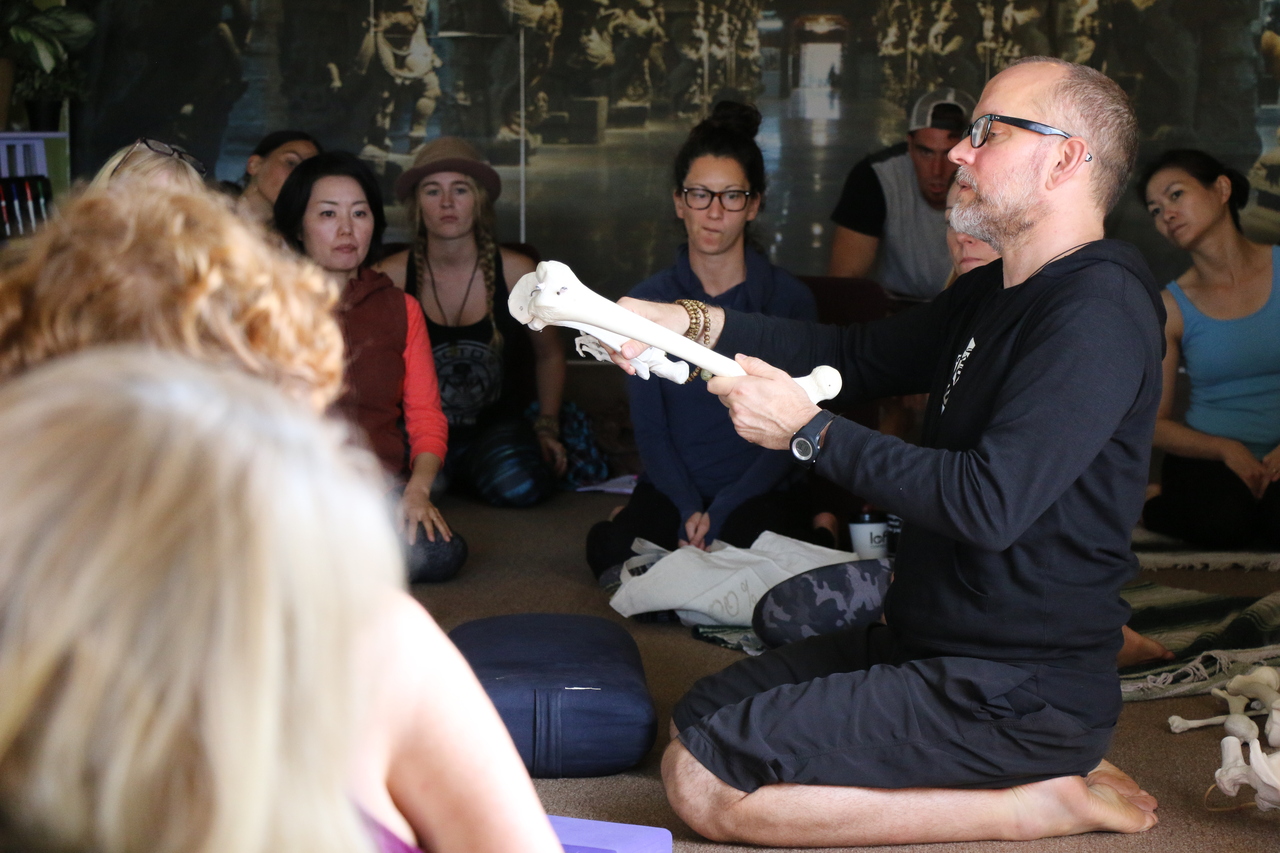
Paul and Suzee Grilley illustrate this vividly with their bone gallery. The theory is that if you line up a dozen human femurs or hip sockets and you will see dramatic, normal differences in shape and orientation. The gallery is a strong argument that skeletal variation is the rule, not the exception. Different bones mean different safe ranges. Two students can follow the same cue and reach very different end points, without either being right or wrong.
My own inquiry into these anatomical differences has yielded different opinions, as some of my favorite teachers with more prescriptive alignment cues have asked about how Paul Grilley chose the photos, and if they are truly representative of typical variation in a yoga class. After reviewing online info that I could find, it seems that small variation is found on average between most people, but it is common to have a very large variation between the least and most of any one group. I am almost certainly one of these few outliers with the larger variation from the norm, as my range of motion is very limited in forward folds, and 15 years of hamstring stretching has not made any difference.
For these few like me with the larger variation, it directly affects how far a hip can rotate, abduct, or flex before reaching a bony stop. In functional terms this is the classic tension versus compression question. If a limit is tension in soft tissue, time and practice may change it. If the limit is bone to bone compression, no amount of force will change it. In practice, one person’s easy lotus is another person’s hard limit, and pushing will not change a bony end range. Function must lead form.
This is exactly how Joe frames a class. Archetypes such as Shoelace, Dragonfly, Caterpillar, Saddle, and Twists point to target regions. From there the shape changes to match the structure. If knees complain in Shoelace, slide into Deer or Swan and keep the outer hip target. If a wide Dragonfly meets a bony block, move to Butterfly and keep the inner thigh target. If a forward fold forces deep rounding, elevate the seat and hinge at the hips so you still feel the back line without collapsing through the spine. This is functional yoga in practice. It mirrors how anatomy-informed teachers and writers now talk about alignment as personal, not universal.
An invaluable take away for every Yin student and practitioner alike is; start with what you intend to feel, not how you intend to look. Keep the target, change the form, and let the rebound tell you if the choice was kind. This is the functional approach to Yin Yoga taught by Paul and Suzee Grilley, carried forward by Joe Barnett, and echoed by Bernie Clark and other anatomy-forward educators. It is also a compassionate way to make Yin safe and effective for real human bodies.
What the Research Says About Yin Yoga
Research on Yin Yoga is still emerging, but the early studies are encouraging. A five week Yin based randomized controlled trial in stressed adults showed reductions in plasma adrenomedullin, a peptide linked with stress physiology, along with improvements in overall psychological health. A ten week online Yin Yoga program during the pandemic reported significant reductions in state anxiety both after individual classes and across the full program. Other comparisons suggest Yin Yoga sessions can produce positive mood changes and cardiovascular benefits similar to other evidence based practices.
These findings support what many practitioners already report: Yin Yoga helps calm the mind, reduce stress, and improve sleep and mood. The evidence is not claiming Yin is a cure all, but it does show that when practiced consistently, usually one to three times per week, Yin Yoga can play a meaningful role in supporting mental health and nervous system regulation.
For those in yoga teacher training or considering adding Yin to their teaching repertoire, this research highlights why Yin is a valuable complement to more active yoga styles. It offers students a practice designed for stress relief, emotional balance, and deeper rest, all supported by growing scientific evidence.
https://pubmed.ncbi.nlm.nih.gov/30020987/ https://pubmed.ncbi.nlm.nih.gov/38550540/
Fascia, Long Holds, and the Science of “Why”
In training Joe kept it simple but took everyone deep. Pick a clear target and give it time. The science behind that cue is mostly about how living tissues behave and how the nervous system responds.
As mentioned, connective tissue is viscoelastic. In viscoelastic materials, sustained load produces creep and stress relaxation. Ligaments, tendons, collagen networks, and fascia all show these time-dependent behaviors in lab studies, which helps explain why Yin favors minutes rather than seconds. You are not forcing. You are allowing tissues to adapt to a steady, modest load.
Why “four minutes” is not a law. You will hear that fascia needs exactly four minutes to “release.” Reviews and educator resources describe viscoelastic responses, but there is no single universal threshold. Different tissues, loads, and people adapt on different timelines. Senior Yin educators, including Bernie Clark, frame time as a parameter to personalize, not a rule to obey.
Not just mechanics. What you feel after a pose is not only tissue deformation. Touch and load can trigger neurophysiological responses up and down the nervous system, changing tone and pain perception without “breaking” anything. This is a leading model for manual therapy effects and likely overlaps with the way quiet loading in Yin changes how the body feels. The benefit is a blend of mechanical, neural, and perceptual adaptations.
What This Means for Practice
- Use moderate, sustainable load aimed at a target area, then give it time.
- Let rebound be your feedback loop. If the echo feels spacious and tension fades, your dose was likely right.
- Skip “adhesion-breaking” language. It is more accurate to say that time and attention change how tissues and the nervous system behave.
Longer, quiet holds make physiological sense because living tissues and nervous systems are time-sensitive. There is no magic minute. Personalize the duration, keep the load kind, and let rest complete the change.
How Long Should You Hold Poses
Joe often landed between three and five minutes once students were settled, but he kept repeating that time is a tool, not a rule. For beginners, one to three minutes is more than enough. Longer is not automatically better, and what matters most is the quality of sensation, not what the stopwatch says.
What I appreciated is that Joe never made students feel trapped in a pose. He let them know they could come out whenever they chose, but he also invited them to feel into their own experience and notice when the time was right. He encouraged exploration in the space between poses, asking students to choose their next step with intentionality and intuition. That balance of freedom and guidance is a gift of Yin and being guided by a masterful teacher like Joe.
Reputable teaching sources say the same. Sensation quality is the true compass, and the rebound is the most honest safety check. If a mild ache dissolves in rest, the dose was likely right. If discomfort lingers, it is a signal to scale back next time. Joe taught this not as a formula, but as a living practice of awareness.
The Three Yin Yoga Phases According to Joe
Exploration comes first. It is the most active part of Yin. Students adjust angles, add props, and find the position that fits their bones.
Time in the pose follows. Efforting softens. Breath is natural. Joe’s line was clear. Now there is a focused intent to surrender.
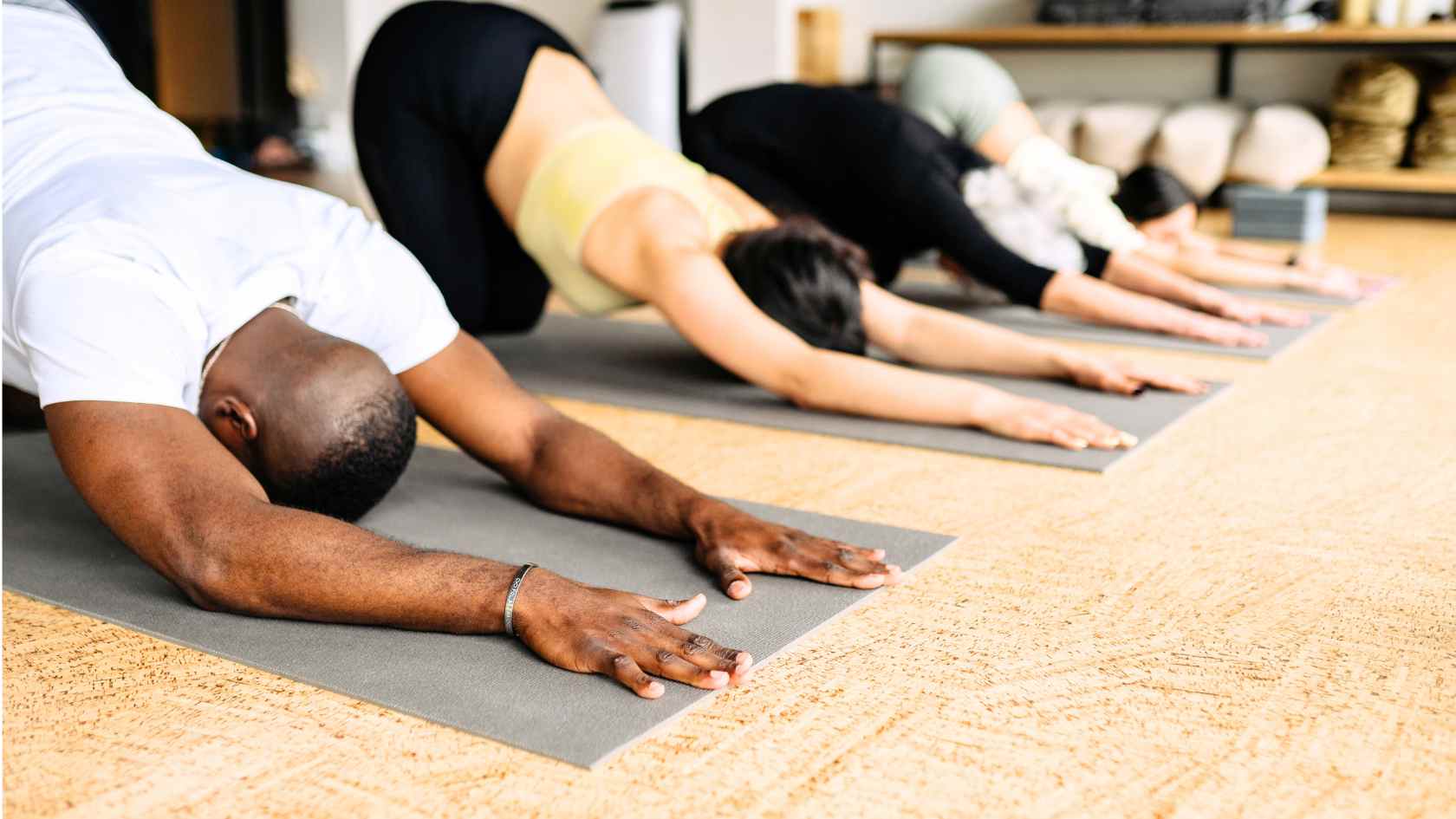
Rebound completes the arc. Students exit slowly and rest where stress is minimal. Savasana, child’s pose, or a side curl. One to two minutes here and you can feel the system reorganize.
The Right Breath for Yin Yoga: Breath That Lets Go
When students asked about breath, Joe kept it simple. The ideal Yin breath is natural and uncontrolled. The shape will change the breath on its own. If someone noticed they were holding, he offered a reset. Full inhale, brief easy hold without tightening the throat, soft sigh or long exhale, then return to a natural rhythm. Holding leans towards yang. The sigh helps it shift toward yin.
“Yin isn’t about forcing the body. It’s about giving it time. Time to open, time to breathe, time to be.” – Joe Barnett
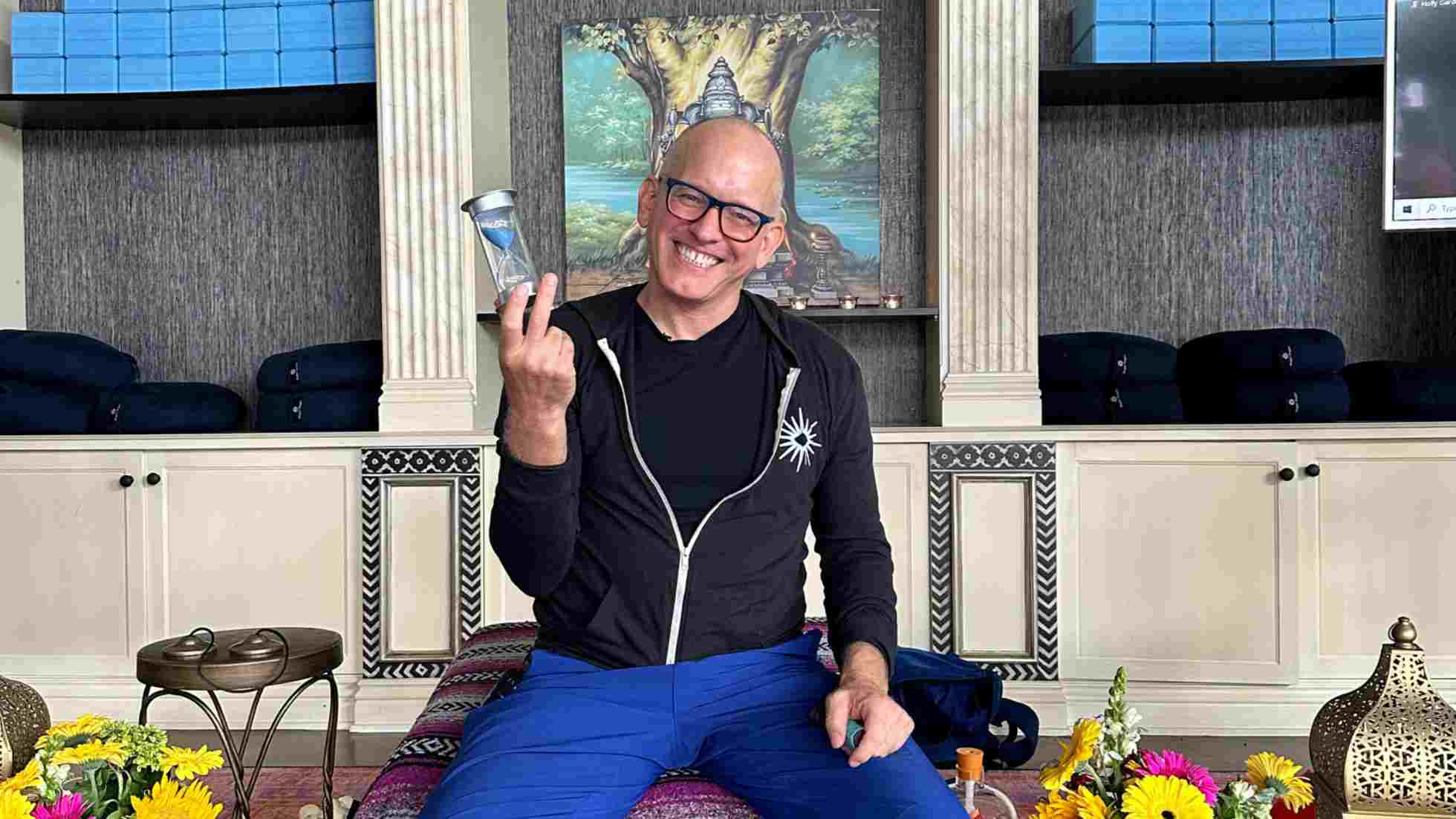
Joe Barnett teaching Yin Yoga at Soul of Yoga Institute
Finding the Edge in Yin Yoga Without Fear
Joe’s teaching on the edge is one of the most useful lessons I have witnessed him give. Questions about where to stop and how much sensation is enough were constant in the room, and he never rushed those conversations. His guidance was steady: look for mild to moderate sensation, never sharp, stabbing, or electric. If a light achiness dissolves during rebound, you were likely in the right place. If discomfort lingers after rest, you went too far. If you felt nothing at all, then the decision comes back to your intention. If your aim is exploration, you may choose to move in deeper. If your aim is deep rest, you may choose to stay softer.
This language is simple, but it carries the wisdom Joe has emphasized for decades. Function matters more than form, and safety is rooted in honest sensation rather than in chasing a picture of a pose. What strikes me is how intuitively he reads a room. When students were hesitant, he offered reassurance that the edge is not a place to fear. When students pushed too hard, he reminded them that less is often the wiser choice.
Joe frames the edge as a living conversation between body, mind, and breath. You do not force your way into it. You arrive with awareness, test what is sustainable, and let time do the rest. The edge becomes less about bravery and more about honesty. That is why his students relax into the practice rather than fight against it. They discover that Yin is not about tolerance of pain, but about cooperation with what they are working with and what they want to experience.
Archetypes Instead of Aesthetics
Joe taught by archetype rather than by perfect shapes. Shoelace targets outer hip and glute, with Swan and Deer as variations. Dragonfly targets inner thighs, with Butterfly as a variation. Caterpillar invites the back of the legs and spine. Twists organize rotation and rib breath. Saddle opens the front body and hip flexors. The target is the point and the shape is a path. Students visibly relaxed when they heard this. He explained that there are just five archetypes, or main poses, and the variations that come from them are all adapted by and for the body who is working with them.
Safety, Contraindications, and Wise Modifications
What reassured me most in Joe Barnett’s teaching was his ethic: the teacher guides, but the student decides. That principle runs through all of the safety guidelines and modifications I have seen echoed in clinical recommendations and from senior Yin educators.
I need to be careful about scope of practice here, and you should always be consulting a doctor for any specific conditions you have. Joe has said that in his experience students who are pregnant, working with osteoporosis, or living with hypermobility, the practice can be adapted. Shorter holds, supportive props, and smaller ranges can make Yin both safe and beneficial. For those with joint sensitivity, support under the knees, bolsters behind the back, or a shift to more accessible variations keeps the practice steady and sustainable.
In each case, the principle is the same. Safety in Yin comes from honest sensation, respect for individual structure, and the freedom for students to adapt the form to their own body. Practiced this way, Yin becomes more safe, and also deeply effective, inviting patience, awareness, and trust.
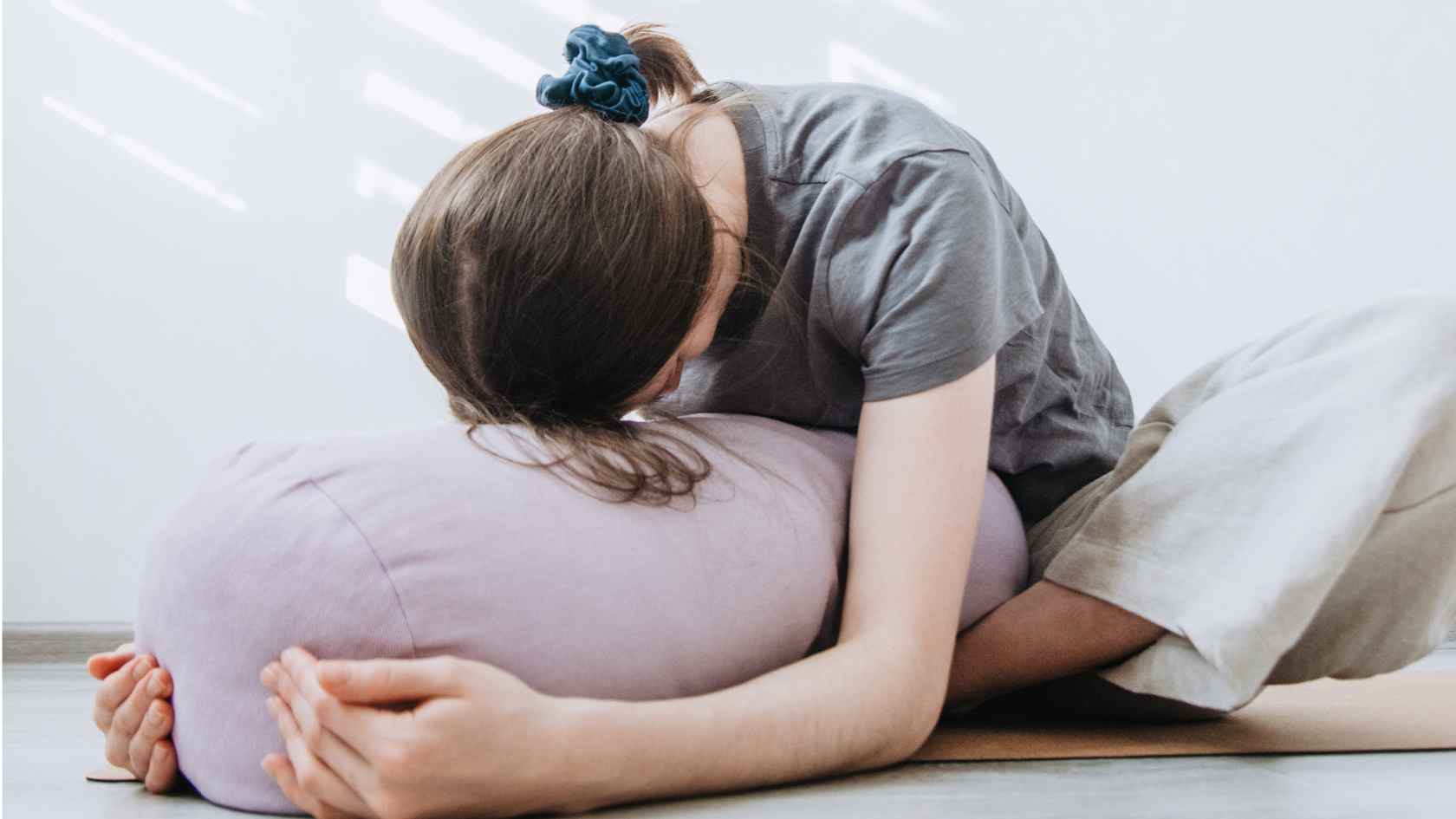
Yin Yoga and the Nervous System
Practitioners often describe a steady shift toward calm after Yin. Sitting in Joe’s introduction to yin training, I watched the room move from fidgety to quiet, then into that liminal rebound where the body feels reorganized. Students reported deep relaxation and restoration.
Sample Beginner Yin Sequence
Use props. Keep the breath natural. Rest neutrally between shapes. Begin with 2 to 3 minutes and build to 3 to 5 if appropriate.
Set the Container
What Joe always emphasized was simple. Arrive, then let everything fall open. Place props within reach. There is nothing to perform. The goal is sensation in the intended region, not a picture of a pose.
Arrival in Relaxed Savasana
- Time: 2 minutes
- Intent: arrive, scan breath without changing it
- Joe-style cue: feel the floor hold you. If you notice breath holding, take one easy inhale, a soft pause, then sigh and let the natural rhythm return.
1) Inner Thigh Focus
Dragonfly or Butterfly
- Time: start 2 to 3 minutes, later 3 to 5
- Target: inner thighs and adductors
- Set up: sit on a folded blanket so the pelvis can tip forward; choose a comfortable width. Butterfly is welcome if a wide straddle feels bony-blocked.
Note: the function is inner thigh sensation. Find the variation that gives you that target without strain.
Exit and rebound: come up slowly, lie back or rest in a supported seat for 1 to 2 minutes. Notice the echo.
2) Outer Hip and Glute Focus
Shoelace or Swan or Deer
- Time: start 2 to 3 minutes per side, later 3 to 5
- Target: outer hip and glute of the front leg
- Set up: if knees complain in Shoelace, slide to Deer or Swan. Props under knees are a sign of wisdom, not a problem.
Note: you are not doing anything wrong if your version looks different. Keep the target.
Exit and rebound: unwind with care, find neutral, rest 1 to 2 minutes. Let the breath find you.
3) Back of Legs and Spine Focus
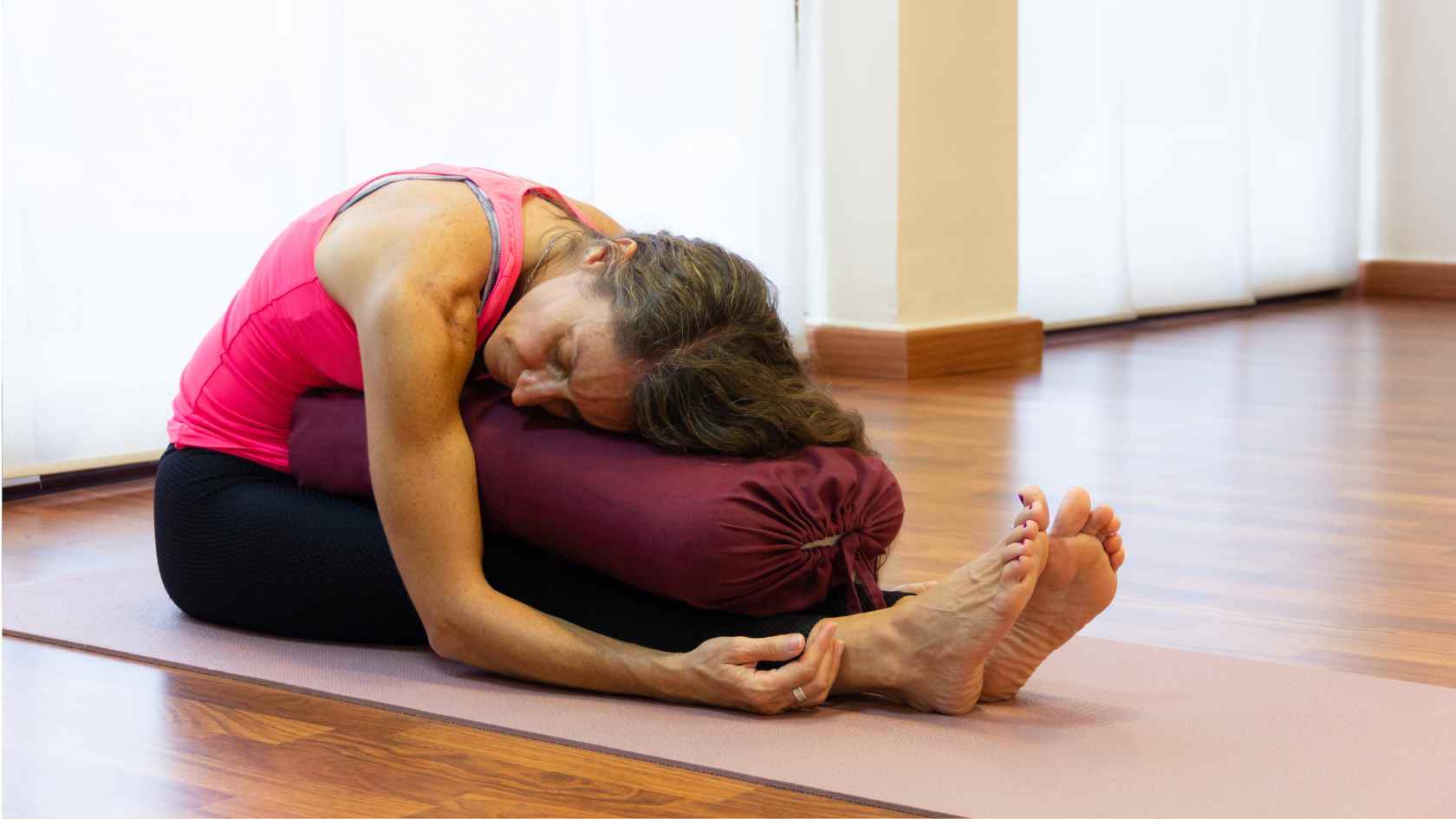
Caterpillar with Support
- Time: start 2 to 3 minutes, later 3 to 5
- Target: hamstrings and the long back line
- Set up: elevate the seat, place a bolster across shins or under knees. Hinge from the hips rather than collapsing the mid back.
Note: if you lose the ability to breathe easily you went too far. Ease back until breath is calm again.
Exit and rebound: recline or sit upright in neutral for 1 to 2 minutes. Track the sensations fading.
4) Gentle Twist, First Side
Twisted Roots or Supported Supine Twist
- Time: 2 to 4 minutes
- Target: comfortable spinal rotation and rib breath awareness
- Set up: keep the twist small and supported. Let ribs expand on the side that feels tight.
Note: a small range you can relax in is more yin than a big range you have to defend.
Exit and rebound: unwind to neutral for 1 minute.
5) Gentle Twist, Second Side
- Time: 2 to 4 minutes
- Repeat the same principles and rebound for 1 minute.
6) Front Body and Hip Flexor Focus
Supported Saddle or Reclined Rock
- Time: 2 to 4 minutes
- Target: fronts of thighs and hip flexors
- Set up: use ample elevation behind the back or choose the upright Rock if reclining is too much. Knees and low back must feel supported at all times.
Note: the function is front body opening. Any variation that meets that intention is correct for you today.
Exit and rebound: come out slowly, roll to a side, rest 1 to 2 minutes.
7) Closing Rest
Savasana
- Time: 5 to 8 minutes
- Note: this is the most yin moment because the target is gone and you feel everything at once. Do nothing. Let the nervous system organize itself.
How to Pace and Personalize Yin Yoga
- Start with 2 to 3 minutes and extend only if breath and face stay calm.
- Treat the rebound as feedback. If a mild ache dissolves in rest, the dose was likely right. If discomfort lingers, shorten next round or add more support.
- Use archetypes as the map and your body as the compass. If a joint complains, change the variation and keep the same target.
Props That Make Yin Yoga Easier
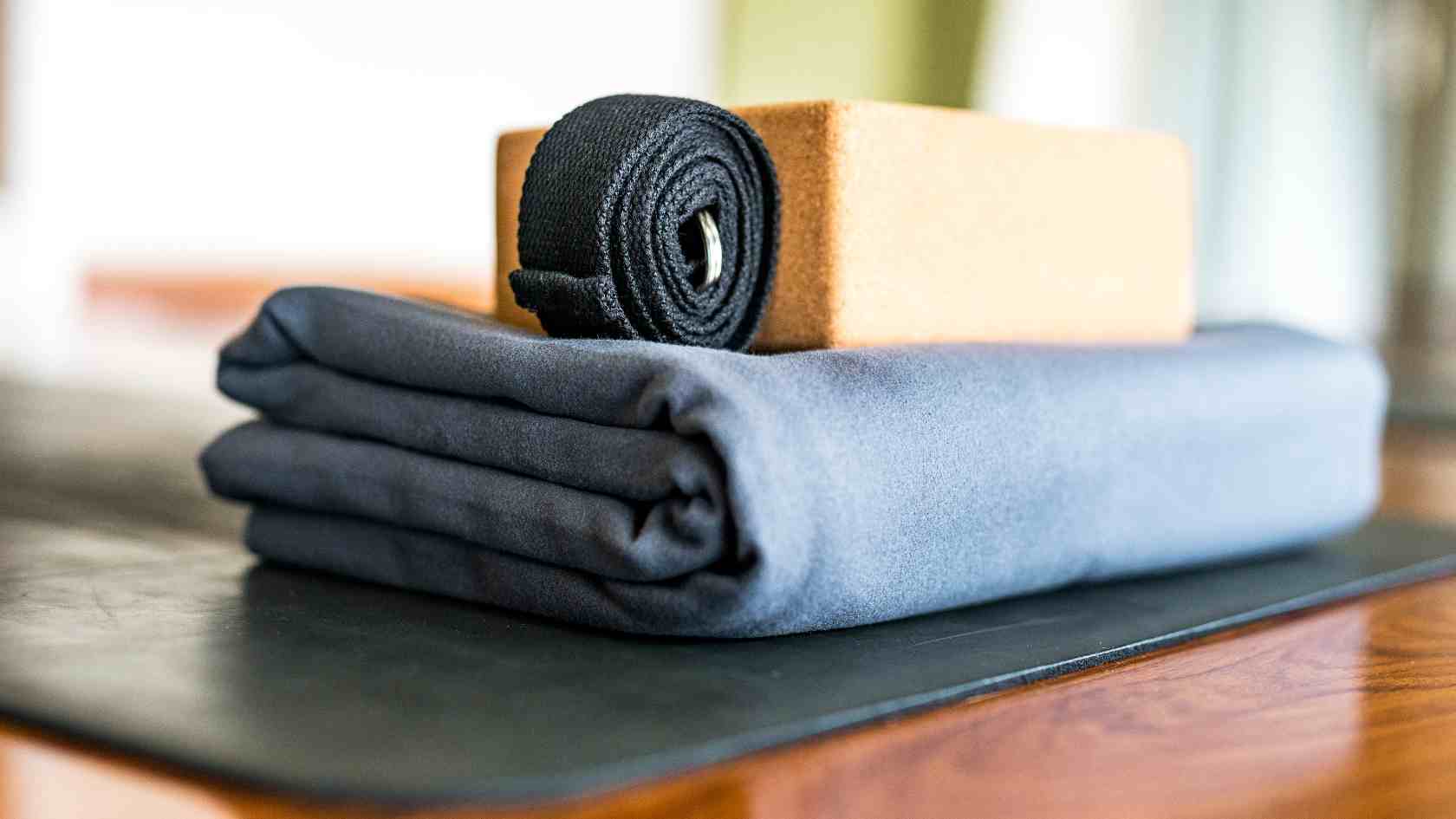
- Folded blanket under the sitting bones for forward folds.
- Bolster under knees in Caterpillar or Savasana.
- Blocks under thighs in Butterfly or under knees in Deer or Swan.
- A second bolster or sturdy cushions to recline on in Saddle.
Breath That Supports Yin Yoga
Keep breath natural. If you notice breath holding, take a full inhale, pause softly without tightening the throat, then sigh or exhale long and quiet. Return to natural breathing. One or two breaths like this are enough to remind the body that you are safe.
Practical Tips for Yin Yoga Practice
- Choose a quiet corner you can return to. A mat or folded blanket, a couple of cushions or a bolster, two blocks or sturdy books, and a strap or scarf are enough.
- Keep props within arm’s reach so you are not breaking the spell to hunt for support.
- Light matters more than most people think. Natural light or a single lamp is easier on the nervous system than overhead glare.
- Keep the room warm, not hot, so your body can soften without bracing. If the environment is busy, steady background sound like a fan can help.
- Create a clear boundary for your practice window. Let family or coworkers know you are unavailable for 20 to 40 minutes. Silence notifications. Use a gentle chime timer.
- Use a short ritual to arrive. Lie down or sit, place one hand on the belly and one on the chest, and take three easy breaths. Soften jaw or shoulders. Set a simple intention such as “I am here to feel, not to force.”
Work with time in a way your body can trust. In cooler rooms add layers or a blanket during rests so your body does not start guarding. At work, adapt with chair variations. When snags arise, simplify. If the mind is restless, shorten holds and extend rebounds. If joints complain, shift variations. If you grow sleepy, allow it without making it the aim.
Track your shifts. Before class rate mood or stress from 0 to 10. After class rate again and note one line about sleep or focus later. Repeat for 5 to 10 weeks.
Keep a small Yin kit ready: a mat or towel, a scarf, a cushion or sweater, and a notebook.
The Truth in the Yin Yoga Rebound
Watching Joe, I saw Yin stripped down to what matters most. Yin and yang are descriptions for explorations available each moment. The pose is where time does its quiet work on the practitioner’s behalf. The rebound is where truth shows itself. Breath in this setting is not managed but surrendered. The teacher offers the map and the student chooses the road that serves their body.
What moved me most was how ordinary the transformation looked. There was no fanfare, no dramatic display. Restless students learned to feel instead of fidget. Those who came in worried about doing it right began to choose variations that respected their own structure. The room grew quieter without anyone being told to be silent. Faces softened on their own. Breath found its natural rhythm. People stood up softer and steadier, as if the floor itself had risen to meet them. A quiet alertness and eyes wide with enthusiasm.
My takeaways are as practical as they are profound. Start with the target, not the look. Trust the rebound more than the stopwatch. Hold less whenever breath tightens. Add support without apology. This is not about winning at flexibility but rather, cultivating honest sensation, setting clear boundaries, and giving the nervous system permission to remember how to settle.
That is the gift I saw unfold in Joe’s room, and it is why I leave every time as a student changed.
Frequently Asked Questions Yin Yoga
What do people love about Yin Yoga?
Many students say Yin Yoga helps them sleep better and feel calmer after work. Yin Yoga for sleep works best in a warm, comfortable room with a longer final rest. If stress and anxiety are high, start with one to three minute holds and let the rebound be your reset.
How can I make Yin Yoga less boring?
Feeling bored or too slow at first is normal. If you feel nothing in a pose, change the variation to reach the target area. If you feel too much, reduce range, add props, and shorten the hold. This is where functional alignment beats one shape fits all.
Is Yin Yoga good for sleep?
Yin often helps people unwind enough to be able to fall into a sleep slumber. A short 20 to 30 minute Yin arc in a warm, comfortable room followed by a longer savasana can support better sleep. Start with one to three minute holds and let the rebound be your reset.
Does Yin Yoga help anxiety?
Early studies suggest yes. A ten week online Yin program reduced state anxiety both right after each session and across the full program, while a separate five week Yin-based trial lowered a stress-related peptide (adrenomedullin) and improved psychological health in stressed adults. Aim for a gentle cadence of one to three sessions weekly for five to ten weeks.
What Temperature Is Best for Yin Yoga?
In my experience most people prefer practicing Yin in a slightly warm but not overheated room. A comfortable temperature allows the body to soften without bracing, while extreme heat can mask sensation and increase risk of overextending. I question the trend of heated Yin Yoga, since heat could invite students to push deeper than their tissues can safely handle.
The safest path is to keep your space just slightly warm, layer clothing or use a blanket during rests, and shorten holds if heat leaves you breathless. Yin Yoga is not designed to be a “hot yoga” style. It works through time, patience, and mindful sensation, not through intensity of temperature.
Paul Grilley, one of the key voices in the development of Yin Yoga, puts it simply: “Temperature matters most in the first few minutes. After that, practice time and attention level the playing field.” In other words, give your body a comfortable environment at the start, then let the focus shift to what truly matters: sustainable sensation, honest breath, and the rebound.
Why Do I Feel Nothing in One Pose and Too Much in Another?
This is the classic tension versus compression question in Yin Yoga. Sometimes the limit you meet in a posture is soft tissue tension. Muscles, fascia, and ligaments can adapt gradually with time under a modest load. Other times the limit is bone to bone compression, where no amount of pushing will change the end range. One person’s comfortable forward fold might be another person’s structural limit.
This is why the functional alignment approach matters so much in Yin. We adjust the form of the pose to safely reach the target area, rather than chasing an aesthetic picture of what the posture should look like. The aim is sensation in the intended region, not replicating someone else’s shape.
Interested in Study Yin Yoga with Joe Barnett?
Soul of Yoga Institute hosts annual trainings with Joe Barnett.