
In this article
- Key Takeaways
- Do You Need To Be Flexible?
- Do You Need To Be In Shape?
- Are You Too Old?
- How Much Experience Should You Have First?
- What About Injuries Or A Health Condition?
- What The Training Actually Asks Of You
- Frequently Asked Questions
- Do I have to be flexible to take yoga teacher training?
- Am I too old to become a yoga teacher?
- What is the hardest part of yoga teacher training?
- How long should you practice yoga before teacher training?
- Can you teach yoga if you are not flexible?
- Can anyone become a yoga teacher?
- Is there a minimum fitness level needed for yoga teacher training?
Yes. Flexibility, age, and fitness are not entry criteria for yoga teacher training. Curiosity and consistency are far more important, which is also why yoga is for everybody.
Key Takeaways
- Flexibility can be a starting point, but it’s not a qualification. Teachers who begin stiff often understand a hard pose from the inside, which tends to make their cues clearer and their modifications more useful.
- Yoga teacher training is mostly seated study. A typical program mixes weekly practice with intensive modules built around anatomy, philosophy, and discussion; it is not a physical bootcamp.
- There is no upper age limit. Training groups regularly include students well past midlife. The world’s oldest known yoga teacher was still teaching eight classes a week in her late nineties!
- The only prerequisite is a willingness to practice and study consistently, not a certain number of years on the mat already logged.
- Most injuries and health conditions are workable with modifications. A conversation with the school before enrolling is the right first step for anything significant.
Do You Need To Be Flexible?
No. Flexibility is not a qualification for yoga teacher training, any level of flexibility is a perfect starting condition, and it changes with practice no matter where you begin.
Some of the most effective teachers started out stiff. A person who has personally worked through tight hamstrings or a locked-up low back understands, from the inside, what a student is challenged by in a pose. That understanding can produce clear cues and more patient teaching than a teacher who found every shape easy from day one. Another important teaching in yoga asana is that flexibility itself is not fixed. Connective tissue and muscle length respond to consistent, gentle movement over weeks and months, which is part of why training programs build in regular practice time rather than treating flexibility as something you either have or don’t. What is actually being trained is not a body that can already do the poses, it is a person who can guide someone else toward them.
A common worry is that a pose like a full split or an unsupported handstand is somehow the bar for entry and it’s not. Most 200-hour curricula spend far more time on foundational alignment, and safe modifications, than they do on advanced peak poses. Plenty of working teachers have never held a handstand away from a wall.
If the real hesitation is a story you’re telling yourself about not being capable enough, that pattern is common and worth examining on its own. See Limiting Beliefs for more on how those narratives form and how to work through them.
Do You Need To Be In Shape?
No, not in the sense most people mean by it. Yoga teacher training asks for mental stamina, the ability to stay engaged through long sessions, rather than athleticism.
Yoga Alliance, the field’s main credentialing body, requires a registered 200-hour program to divide its hours across several categories, not just physical practice: techniques and asana, teaching methodology, anatomy and physiology, philosophy and ethics, and supervised practicum teaching. Across most programs, hands-on practice accounts for less than half of the total hours, with the rest spent in a mix of lecture, discussion, reading, and rehearsed teaching. A typical week mixes guided practice with reading and discussion, and most programs also build in several week-long intensive modules over the course of the training. Much of that time is spent seated: taking notes, working through anatomy diagrams, discussing philosophy texts, and observing practice-teaching.
What people usually find hardest is not a physical pose, it’s the mental stamina of a full intensive week: extended focus, reading, and staying present through material that runs deeper than a typical class. A sample day might open with an hour or two of guided practice, move into several hours of anatomy or philosophy lecture, break for a short rest, then return for teaching rehearsal and group discussion in the evening. Someone who can sustain attention across a day built like that tends to do better than someone who simply has an advanced backbend. See the 200-hour training page for our program’s actual weekly structure.
Are You Too Old?
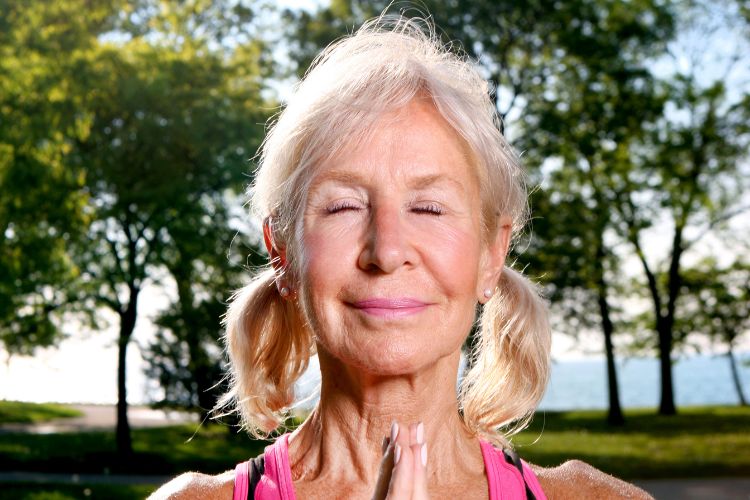
No. Age is not a cutoff for yoga teacher training. Programs have no upper age limit built into admissions, and one of the clearest examples of what that looks like in practice is not hypothetical. Enter, Tao Porchon-Lynch.
Tao Porchon-Lynch, recognized by Guinness World Records as the oldest yoga teacher in the world, was still teaching eight classes a week into her late nineties. She began practicing yoga in the 1920s and never stopped, and her story is proof that neither the practice nor the teaching of it comes with an upper age limit.
National health survey data puts yoga participation at roughly 8 percent among adults 65 and older, compared to about one in five adults under 45. That is a smaller share, but it still represents millions of people practicing well past midlife, and a meaningful number of them eventually consider teaching. Age can work in a teacher’s favor, too: life experience, patience, and credibility with an aging student population are not things a 25-year-old can fast-track. What matters more than the number of candles on your last birthday cake is whether you can commit to consistent practice and study for the length of the program.
How Much Experience Should You Have First?
Most 200-hour programs welcome complete beginners alongside people who have practiced for years, and there is typically no minimum number of months or years of practice built into enrollment.
What matters more than duration is consistency. Someone who has practiced two or three times a week for several months, and who is reasonably familiar with the basic shapes used across a class (down dog, warrior poses, forward folds, basic seated postures), tends to get more out of the training than someone walking in cold, simply because the vocabulary and the shapes are not brand new. Trying more than one style before you commit also helps. Vinyasa, hatha, yin, and restorative classes each emphasize the body differently, and seeing how different teachers sequence, cue, and pace a class gives you more to compare once your own training starts explaining why a sequence is built the way it is.
If you are asking this question because you are new to yoga altogether, the honest answer is that beginners do enroll and do finish successfully. What would serve you best before day one is a few months of steady practice, not a certain number of years.
What About Injuries Or A Health Condition?
Most injuries and health conditions are workable with modifications. Yoga teacher training is built around props, adapted shapes, and alternative options for a reason, and a large part of the anatomy curriculum exists precisely so trainees learn to work around limitations rather than force a single ideal shape.
In practice, this covers a wide range of situations: a bad knee that rules out deep kneeling poses, a low back that needs extra support in forward folds, wrist issues that call for a fist or forearm variation instead of a flat palm, pregnancy, or a mental health condition like anxiety or depression that changes how much stillness or eye contact feels comfortable. Trauma-aware, inclusive teaching has become a standard part of many 200-hour curricula rather than an elective, which reflects how common these situations actually are among both students and future teachers.
Some situations do still call for a conversation before you enroll: a recent surgery, an unstable injury, or a condition your doctor has flagged as needing caution with movement. That conversation is not a screening test designed to weed people out, it is a practical step so the program can tell you honestly whether the timing is right and what modifications will look like for you specifically.
If you are working with an injury, chronic pain, or a diagnosed condition, reach out to the program directly before enrolling and describe it plainly. Programs with a yoga therapy component built into their broader offerings tend to be especially well equipped to have that conversation with you, since they train teachers specifically in adapting practice to medical and psychological conditions.
What The Training Actually Asks Of You
The real prerequisites for yoga teacher training are not physical. They are about attendance, study, and a willingness to be watched.
Here is what many programs ask of you:
- Consistent attendance across weekly sessions and week-long intensive modules, usually spread over 9 to 12 months
- Reading and studying material on anatomy, philosophy, and teaching methodology between sessions, often several hours of homework a week outside of class time
- Practicing teaching in front of classmates, which is uncomfortable for almost everyone at first
- Keeping a personal practice log or journal through the program, which most curricula use to track how your understanding develops over time
- Enough space in your life to hold space for study and self-reflection over several months, rather than a single burst of effort
These are all examples and need to be confirmed with the place you choose your training. One thing you will notice across the board no matter which training: None of what is listed will show up on a flexibility test or a fitness assessment. For the fuller picture of what the path from student to teacher looks like, see How Do You Become A Yoga Teacher? And if cost factors into your decision, Yoga Teacher Training Costs breaks down what a program like this typically runs.
Can anyone become a yoga teacher? For the vast majority of people asking that question, yes. Flexibility deepens with practice, fitness is about your personal level of stamina rather than athleticism, and age is not a ceiling written into the curriculum. The real prerequisite is curiosity, and a willingness to keep showing up.
Frequently Asked Questions
Do I have to be flexible to take yoga teacher training?
No. Flexibility is not required to enroll in or complete yoga teacher training. You do not need to touch your toes or hold a deep backbend to qualify. Training is built around learning to work with the body you actually have, and many strong teachers started out stiff and learned to teach through that experience directly.
Am I too old to become a yoga teacher?
No. There is no upper age limit for yoga teacher training. Tao Porchon-Lynch, recognized by Guinness World Records as the oldest yoga teacher in the world, taught eight classes a week into her late nineties. Training groups commonly include students well past midlife, and age itself does not affect whether you can complete or benefit from the program.
What is the hardest part of yoga teacher training?
For most people, it is not physical. The hardest part is usually the mental stamina required for full intensive weeks: long days of study, dense material on anatomy and philosophy, and the discomfort of practicing teaching in front of classmates for the first time. Sustained focus over months, not flexibility or fitness, is what trips people up most often.
How long should you practice yoga before teacher training?
There is no fixed minimum. Many 200-hour programs accept complete beginners. That said, a few months of consistent practice, two or three sessions a week, helps you arrive familiar with basic poses and sequencing, so class time goes toward deepening your understanding instead of learning shapes for the first time.
Can you teach yoga if you are not flexible?
Yes. Teaching yoga is about guiding someone else through a pose safely, not demonstrating the deepest version of it yourself. Many teachers use cues, props, and verbal instruction more than personal demonstration, and a teacher who understands tightness firsthand often gives better modifications than one who has never needed them.
Can anyone become a yoga teacher?
Almost anyone. Yoga teacher training does not screen for flexibility, fitness level, age, or prior experience. What it does ask for is consistent attendance, willingness to study, and a commitment to show up across several months. If you meet that bar, formal yoga experience or physical ability is not what stands in your way.
Is there a minimum fitness level needed for yoga teacher training?
No. There is no fitness test to pass before enrolling. Training days combine study with practice, and the physical demand is closer to a full engaged day than an athletic event. What matters more than current fitness is the stamina to stay focused through long sessions and the willingness to keep practicing consistently over months.
Begin your training
200-Hour Yoga Teacher Training
Build a strong foundation for teaching and deepen your own practice.
Explore the 200-Hour Program