

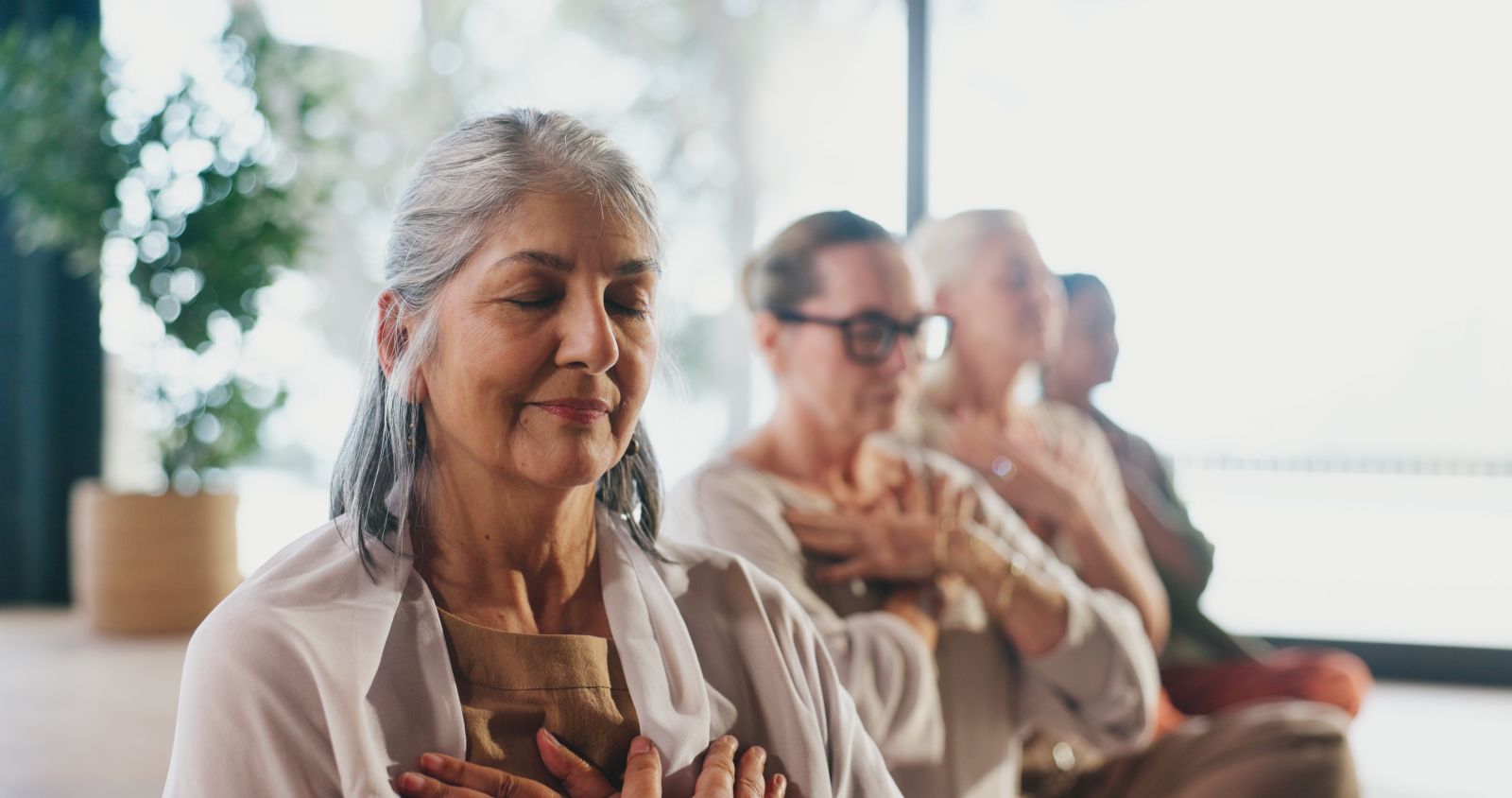
January 21-26, 2027. A Six-Day Immersive Training on the Thresholds of a Woman’s Life
This Training is hosted in person, livestream and via recording.
A woman’s body moves through more thresholds than are typically discussed at one time. Puberty, pregnancy, motherhood, perimenopause, menopause, and empty nest. Each of these transitions rewires the brain, the nervous system, the gut, and particularly, the identity. And each one is still, too often, treated as a problem to manage rather than a transition to be honored.
What if women were taught to stop resisting nature and learned instead to go with it? How would that enable a reclamation of health and wellbeing?
This module was built for students of yoga, practitioners of all kinds, and those interested in holistic care who want to meet women at these thresholds with real knowledge: clinical, contemplative, and lived. Over six days, we will move between the science of the changing female body and the wisdom of the women who have crossed these thresholds before us.
The Goal of This Module
This module was built for one purpose: to give practitioners real knowledge, clinical, contemplative, and lived, for meeting women at the thresholds of puberty, pregnancy, motherhood, perimenopause, menopause, and beyond.
By the end of the six days, students will leave with a working understanding of the neurology, endocrinology, and physiology of perimenopause, menopause, and the maternal brain. They will leave with the presence to sit with a woman in medical trauma, grief, brain fog, or cathartic rage. They will understand how these transitions land differently on women of color, and why so many find their way to the yoga mat and the therapy room after being failed elsewhere. And they will come away with practices, not just information, for helping women meet these passages as an initiation rather than a decline.
While the clinical focus of this training is on sis gender females, all bodies, in all forms and orientations are welcome.
Learning Objectives
By the end of the training, students will be able to:
- Describe the major transitions of a woman’s life, puberty, pregnancy, motherhood, perimenopause, menopause, and empty nest, as developmental thresholds rather than problems to manage
- Explain the neurology and endocrinology of the maternal brain, and of perimenopause and menopause
- Understand the relationship between hormonal change, digestion, and gut health
- Explain the role of cortisol and chronic stress in shaping the experience of hormonal transition
- Recognize how identity, race, and social location shape a woman’s experience of the medical system and of healing
- Understand common patterns of medical dismissal, misdiagnosis, and harm experienced by women, and by women of color in particular
- Distinguish between fixing a woman’s experience and companioning her through it
- Offer a defined set of yogic, Ayurvedic, and complementary tools suited to each life stage
- Apply the Pancha Maya Koshas as a whole-systems lens for a woman’s physical, energetic, mental, emotional, and spiritual experience
- Recognize signs of post-traumatic growth as well as ongoing psychological distress
- Build an individualized plan of care that reflects a client’s stage of life, history, and goals
- Recognize when a woman’s presentation calls for medical or mental-health referral
- Hold space for grief, rage, brain fog, and medical trauma without diagnosing or interpreting
- Understand the limits of one’s own training and scope when working with complex hormonal, psychological, or medical presentations
- Approach each life transition as a potential initiation into clarity, authority, and depth, rather than only a decline to manage
Tuition: $1,000
Payment plans available.
Meet Your Teachers and Schedule
January 21: Seasons of Growth with Flossie Park
Flossie holds the wide view. Drawing on a lifetime of lived experience, she will guide us through the full arc of women’s transitions, from puberty through motherhood, perimenopause, menopause, and beyond, and how to move through each one emotionally, spiritually, and physically. This is elder wisdom in the truest sense: not theory, but a map drawn from having walked the road.
Students will explore:
- The full arc of a woman’s seasons, puberty, pregnancy, motherhood, perimenopause, menopause, and empty nest, as developmental stages of a woman’s life
- Moving through each season physically, emotionally, and spiritually, framed through a whole-person understanding of health and disease across the life span
- What it means to honor a season rather than manage it as a problem
- Lived, elder wisdom as a form of knowledge in its own right
- Orienting the container for the week and how each teacher’s piece fits into the whole
January 22-23: Motherhood and the Maternal Brain with Susana Jones
Integral Matrescence: Yoga Therapy for Maternal, Social, and Planetary Health
Science is finally catching up to what mothers have always known: pregnancy and early motherhood catalyze developmental change as profound as puberty itself. Susana will guide us through what happens to the female brain during this window, the psychological shifts, the disorientation of major identity change, and the ways Western culture actively works against women during one of the most transformational periods of their lives. Essential terrain for any yoga therapist working with new and expecting mothers.
Students will explore:
- The transition to motherhood as a developmental threshold, and matrescence as a lifecycle stage in its own right
- The public health imperative behind supporting new mothers, and where this work sits within IAYT’s scope of practice
- Systemic fragmentation in maternal care
- Brain plasticity and structural change in the maternal brain
- Whole-systems mapping of a mother’s experience through the Pancha Maya Koshas
- Oxytocin as a bridging mechanism between body, brain, and relationship
Evidence-Based Interventions, Barriers and Community Healing, Maternal Praxis and Plans of Care
Students will explore:
- Postpartum depression, fatigue, and post-traumatic growth
- Evidence from clinical research on somatic practice and maternal mental health
- Barriers to care: time poverty, cultural guilt, and group dynamics
- Building an individualized plan of care for a new or expecting mother
- Choosing and sequencing the right tools for a mother’s specific stage and needs
January 24: We Heal Together: Embodied Practices for Individual and Collective Wholeness with Michelle Cassandra Johnson
An advanced studies session on the places where personal healing and collective history meet. Michelle will guide us through the intersections of the medical system, racial trauma, and collective trauma: how systems of care have both nurtured and harmed communities, how trauma travels through bodies and generations, and how our own identities shape our experience of health and healing. Through contemplative practice, embodied inquiry, and discussion, we will explore what it means to companion trauma, our own and our students’, with presence rather than a fix-it mindset, and how yoga can become a practice of belonging in a world that teaches separation.
Students will explore:
- How identity and social location shape a woman’s experience of health, suffering, and healing
- Trauma as psychological distress, carried individually and collectively
- Presence, compassion, and discernment in companioning trauma rather than fixing it
- The legal, ethical, and business realities of holding space for vulnerable participants
- Teaching and delivering embodied practice for individuals and groups
- Fostering trust through privacy, confidentiality, and safety in the therapeutic space
- Self-inquiry as the foundation of ethical, sustainable care
January 25-26: Perimenopause and Menopause, East and West, and the Art of Peri/Menopausal Care with Kulreet Chaudhary, Neurologist and Ayurvedic Physician and Alana Keith, Homeopath and Yoga Therapist
One practitioner, two lenses, joined by a second. Kulreet, trained in both neurology and Ayurvedic medicine, brings a rare integrated view of perimenopause and menopause, tracing the connections between cortisol, digestion, and the changing brain through both clinical and Ayurvedic frameworks. Alana, a Homeopath, Traditional Naturopath, and Certified Yoga Therapist, helps women navigate the demands of this life stage through natural, holistic approaches that restore balance, build resilience, and support lasting wellbeing, drawing on homeopathy, naturopathic principles, and the therapeutic tools of yoga. Together they offer a full picture: what is happening hormonally, why it shows up as brain fog, gut disruption, and fatigue, and what to do about it, from clinical, Ayurvedic, and homeopathic traditions alike.
The Perimenopausal and Menopausal Brain and Body
Students will explore:
- The neurology of perimenopause and menopause, and what is actually happening in the brain
- Hormonal shifts and their biological impact across later stage life, including digestion and gut health
- Cortisol, stress, and the changing body, translated into language a practitioner can use directly with clients
Tools for the Changing Years
Students will explore:
- Yogic and Ayurvedic tools for supporting women through perimenopause and menopause
- Homeopathic and naturopathic tools alongside the therapeutic tools of yoga
- Reconnecting a woman with her body’s innate capacity to heal, and the interaction of body, breath, mind, and emotion through this transition
- Integrating clinical, Ayurvedic, homeopathic, and yogic approaches into one collaborative view of care
Why This Is Essential
Every practitioner will, at some point, sit across from a woman moving through one of these thresholds, whether she speaks about it in these terms or not. This module gives you the clinical grounding, the cultural awareness, and the embodied practice to meet her there. The effort isn’t to fix her, but to walk beside her, and to help her recognize what is rising in her as wisdom.
Who This Training Is For
This training is appropriate for yoga teachers, yoga therapists, coaches, doulas and midwives, nurses and healthcare professionals, psychotherapists and mental health clinicians, bodyworkers and somatic practitioners, wellness educators, and anyone interested in holistic women’s care.
No previous professional certification is required. This is an educational and professional-development program. It does not authorize students to diagnose, treat, or cure medical or mental-health conditions unless they already possess an appropriate professional license and are working within that license.
A Different Kind of Women’s Health Education
This isn’t simply a collection of techniques for managing symptoms.
It is an inquiry into the female body as biology, psychology, lineage, and lived wisdom, and into what it means to walk beside a woman rather than fix her.
Students will learn from teachers who carry distinct bodies of knowledge: neurology, Ayurveda, homeopathy, somatic and embodiment practice, elder wisdom, and the study of collective and racial trauma. Yet the training remains united by one commitment: every threshold in a woman’s life deserves to be met with real knowledge and real presence, not dismissal.
The training begins with the wide view of a lifetime’s transitions, moves through the maternal brain and the perimenopausal and menopausal body, and the tools, clinical, Ayurvedic, homeopathic, and yogic, that support her through them, and closes by returning the personal to the collective.
Tuition: $1,000
Payment plans available.