

In this article
- Supporting Heart Health Through Gentle, Therapeutic Practice
- How can I strengthen my heart while also reducing stress and supporting long-term health?
- How Yoga Supports Cardiovascular Health and Heart Function
- Is Yoga Safe for Heart Disease?
- Best Types of Yoga for Heart Health and Cardiac Conditions
- Key Yoga Poses and Movement Principles for Heart Health
- Breathing Practices for Heart Health and Cardiac Recovery
- Meditation and Guided Relaxation for Heart Health
- Yoga in Cardiac Rehabilitation
- Getting Started Safely with Yoga for Heart Disease
- Final Thoughts
Supporting Heart Health Through Gentle, Therapeutic Practice
I’ve watched students come to yoga after heart attacks, bypass surgeries, and life-altering diagnoses. What surprises most of them? How much better they begin to feel after just a few weeks of gentle, intentional movement and breath.
Heart disease affects millions worldwide, often shifting the rhythm of daily life and raising important questions about how to care for the body safely and sustainably.
People living with cardiac conditions – whether recovering from a cardiac event, navigating post-surgical healing, or managing chronic high blood pressure or cholesterol – often ask the same question:
How can I strengthen my heart while also reducing stress and supporting long-term health?
Yoga therapy tailored for heart health offers a supportive, evidence-informed path forward. By combining gentle movement, mindful breathing, and nervous-system regulation practices that help the body shift out of chronic stress, yoga for heart disease supports both physical and emotional wellbeing. The result is improved cardiovascular function, greater emotional resilience, and a renewed sense of confidence in one’s own body.
Understanding Heart Disease and the Role of Lifestyle in Heart Health
Heart disease is an umbrella term that includes:
- Coronary artery disease
- Heart failure
- Irregular heart rhythms (arrhythmias)
- Heart valve dysfunction
While medical management is essential, lifestyle interventions also play a crucial role in both prevention and rehabilitation.
Chronic stress, sedentary behavior, poor sleep, and unregulated breathing patterns place ongoing strain on the cardiovascular system. Over time, these factors can contribute to elevated blood pressure, inflammation, and impaired autonomic balance.
Yoga therapy supports heart health by helping the heart settle, breathe more efficiently, and carry less overall stress. Over time, this approach naturally encourages greater kindness toward the body, deeper self-awareness, and a more compassionate relationship with one’s own experience.

How Yoga Supports Cardiovascular Health and Heart Function
Yoga therapy works on multiple interconnected systems that influence heart health:
1. Autonomic Nervous System Regulation
Gentle yoga and breathing practices help shift the body out of chronic sympathetic (fight-or-flight) activation and into parasympathetic (rest-and-restore) states. This shift supports lower resting heart rate, improved heart rate variability, and reduced blood pressure.
2. Breath Efficiency
Many people with heart disease develop shallow, rapid breathing patterns. Yoga emphasizes slow, diaphragmatic breathing, which improves oxygen exchange and reduces cardiac workload.
3. Circulation and Vascular Health
Gentle movement improves peripheral circulation, supports venous return, and helps reduce stiffness in blood vessels.
4. Stress Reduction
Stress is a well-established risk factor for cardiovascular disease. Yoga practices consistently show reductions in perceived stress, anxiety, and depressive symptoms – factors that directly impact heart health.
Is Yoga Safe for Heart Disease?
When appropriately adapted, yoga is considered safe for most people with heart disease. However, how yoga is practiced matters greatly.
Yoga therapy for cardiac populations prioritizes:
- Low to moderate-intensity movement
- Slow transitions and stable postures
- Avoidance of breath holding or strain
- Emphasis on rest and recovery
Anyone with a recent cardiac event, uncontrolled blood pressure, advanced heart failure, or new or worsening symptoms should consult their healthcare provider before beginning a yoga program.
Best Types of Yoga for Heart Health and Cardiac Conditions
Not all yoga styles are appropriate for cardiac populations. The following approaches are most supportive:
- Yoga Therapy – Individualized, condition-specific practices designed with safety and medical context in mind
- Restorative Yoga – Fully supported poses that promote deep relaxation and nervous-system recovery
- Gentle or Chair Yoga – Accessible practices that support mobility without excessive cardiovascular demand
Highly vigorous styles, heated yoga, and practices emphasizing breath retention or intense core work are generally not recommended unless cleared by a medical professional.
Key Yoga Poses and Movement Principles for Heart Health
Yoga therapy for heart health is not defined by specific poses, but by how practices are adapted to the individual. Depending on a person’s condition and tolerance, commonly emphasized elements may include:
- Gentle spinal range-of-motion in seated or supine positions
- Supported stretches for the front and back of the torso
- Chair-based standing poses to support strength, balance, and confidence
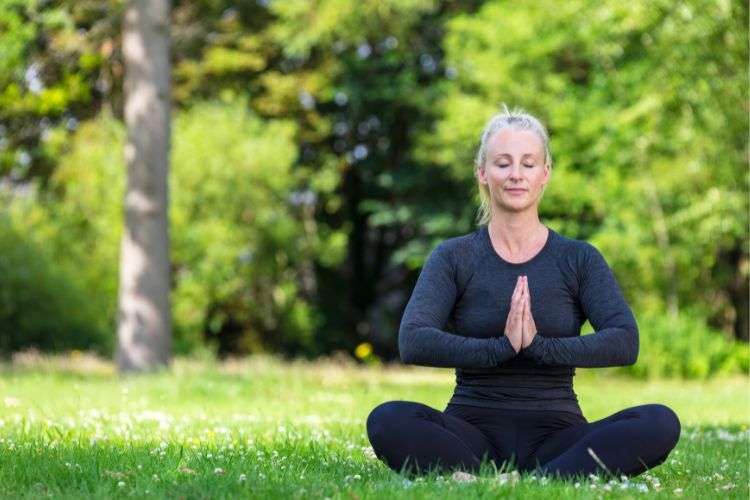
Poses are held comfortably, often with the support of props, and always coordinated with slow, steady breathing.
Breathing Practices for Heart Health and Cardiac Recovery
Pranayama is one of the most powerful and accessible tools in yoga therapy for individuals living with heart disease. Because breathing patterns are closely linked to heart rate, blood pressure, and nervous-system regulation, even subtle shifts in how we breathe can have meaningful effects on cardiovascular function and overall stress levels.
Helpful practices often emphasize slow, steady, and comfortable breathing, such as:
- Slow nasal breathing, which supports oxygen exchange and encourages calm, efficient respiration
- Extended exhale breathing (for example, inhaling for a count of four and exhaling for a count of six), which gently supports relaxation
- Gentle coherent breathing at approximately 5–6 breaths per minute, a pace shown to support heart rate variability and nervous-system balance
Practices that involve breath retention, forceful exhalation, or rapid breathing are generally avoided for cardiac populations unless specifically prescribed and closely guided by a trained yoga therapist or healthcare professional.
Meditation and Guided Relaxation for Heart Health
Meditation and guided relaxation practices play an important role in yoga therapy for heart health, supporting emotional resilience and easing fear after cardiac events. For many individuals, these practices help rebuild a sense of safety and trust in the body, which is often disrupted following diagnosis, hospitalization, or surgery.
Regular meditation and relaxation are also closely linked to improved sleep quality. By calming the nervous system and reducing nighttime arousal, these practices can support easier sleep onset, fewer awakenings, and more restorative rest.
Even brief daily practices of 5–10 minutes have been shown to reduce stress hormones, support nervous-system regulation, and contribute to cardiovascular recovery over time. Practices such as yoga nidra and gentle, body-centered awareness – where attention is guided through physical sensations in a steady, reassuring way – are especially supportive for individuals recovering from cardiac trauma.
Yoga in Cardiac Rehabilitation
Yoga therapy is increasingly used alongside traditional cardiac rehabilitation programs. It complements aerobic conditioning by addressing nervous-system balance, stress management, and overall quality of life.
For many patients, yoga becomes a bridge back into movement – offering a sense of safety, agency, and confidence that supports long-term adherence to heart-healthy behaviors.
Getting Started Safely with Yoga for Heart Disease
If you are living with heart disease and interested in yoga:
- Start slowly and gently
- Work with a qualified yoga therapist when possible
- Prioritize consistency over intensity
- Stop immediately if you experience chest pain, dizziness, or shortness of breath
Yoga therapy is not about pushing limits – it is about creating sustainable conditions for healing.

Final Thoughts
Whether you are navigating recovery, managing a chronic heart condition, or seeking sustainable ways to care for your heart, yoga therapy meets you where you are – offering steady, supportive practices that honor both science and lived experience.
As interest in yoga for heart health continues to grow, so does the importance of thoughtful, well-informed teaching. Supporting individuals with cardiovascular conditions requires more than good intentions; it calls for a clear understanding of safety, adaptation, and compassionate care.
About the Author
 Becky Michalski, RN, BSN, C-IAYT, E-RYT 200 is a certified yoga therapist and registered nurse with over 20 years of experience in acute and critical care. She integrates clinical understanding with yoga’s therapeutic practices to support whole-person health, meeting individuals with steadiness, compassion, and respect.
Her evidence-informed teaching emphasizes mindful movement, breath awareness, and guided relaxation practices that support integrated healing and recovery. Using gentle, practical mindbody tools, she helps students build stability, confidence, and ease in their bodies and minds.
Her approach makes yoga accessible for those managing back pain, cancer recovery, and cardiac conditions.
Becky’s work is deeply informed by her most influential teachers, Nischala Joy Devi and Richard Miller, and by the wisdom of the teachers within the Soul of Yoga Therapy program. She currently teaches Yoga for Cancer Survivors and Yoga for a Healthy Heart and works as a nurse in a Cardiac Rehabilitation Program in Anchorage, Alaska, where she bridges the art and science of healing to empower individuals and cultivate sustainable wellbeing.
Turn study into service
Yoga Therapy Certification
Explore a comprehensive path toward becoming a professional yoga therapist.
Explore Yoga Therapy Training