
The Difference Between 200, 300, and 500-Hour Yoga Teacher Training
In this article
- 5 Key Takeaways
- The 200, 300, and 500-Hour Levels at a Glance
- How the hours stack to RYT 500
- What a 200-Hour Yoga Teacher Training Covers
- Core curriculum
- Who the 200-hour is for
- What a 300-Hour Yoga Teacher Training Adds
- How the 300-hour goes deeper
- What “500-Hour” Actually Means
- Integrated 500 vs sequential 200 plus 300
- Can you mix schools and formats
- RYT, E-RYT, and Yoga Alliance Credentials Explained
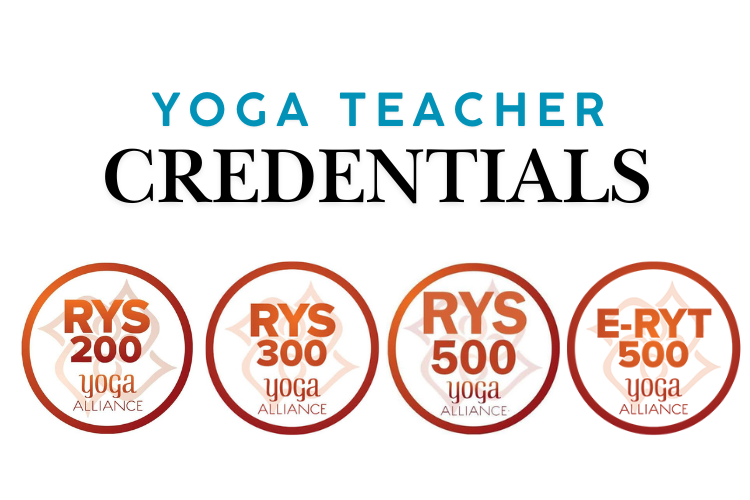
- RYT 200 vs RYT 300 vs RYT 500
- What E-RYT adds
- What Each Level Costs and What You Can Earn
- Tuition by level
- Earnings by credential
- Is the jump worth it?
- Online, In-Person, and Hybrid Training at Each Level
- Why online yoga teacher training is so popular now
- What a hybrid model offers
- How to Choose the Right Level for Where You Are
- Choose the 200-hour if…
- Choose the 300 or 500 path if…
- Bringing It Together
- Frequently Asked Questions
- Is a 200-hour yoga teacher training enough to teach?
- Can you skip the 200-hour and go straight to a 300-hour?
- Is a 500-hour yoga certification worth it?
- Do the 200 and 300-hour trainings have to be from the same school?
- How long does an RYT 200 certification last?
- Can you complete a yoga teacher training online?
- How much does a 500-hour yoga teacher training cost?
200-hour, 300-hour, or 500-hour yoga teacher training: which should you pay for? You can reach the 500-hour level two ways: one integrated 500-hour training, or a 200-hour plus a separate 300-hour. This guide breaks down what each level teaches, costs, and can earn.
Go here to learn about Yoga Alliance’s new Standards for 2027.
5 Key Takeaways
- The entry credential is the 200-hour. A 200-hour yoga teacher training is the foundational certification that lets you teach, the 300-hour is advanced training, and the 500-hour is the full advanced credential.
- “500-hour” is a total, not a single fixed course. It means 500 training hours, which you can earn as one integrated 500-hour program or as a 200-hour plus a separate 300-hour. In the combined route, the 200-hour comes first.
- Tuition scales with the level and the format. US tuition runs roughly $1,000 to $7,000 for a 200-hour and about $3,000 to $8,000 for a 500-hour, with online programs usually the most affordable and immersive in-person retreats the priciest.
- Earning potential widens with hours. RYT 200 teachers typically earn $30 to $75 per class, while RYT 500 teachers often command $50 to $150 or more and unlock privates, workshops, and retreats.
- Match the level and the format to your life. Choose your training level by your teaching experience and goals, and pick an online, in-person, or hybrid format that fits your schedule.
Interested in learning what a 200-hour Yoga Teacher Training costs that no one else is talking about? Go here to find out!
The 200, 300, and 500-Hour Levels at a Glance
| Level | Credential | Who it is for | Prerequisite | Typical Duration |
|---|---|---|---|---|
| 200-hour | RYT 200 | New teachers | None | 3 to 12 months |
| 300-hour | Stepping stone to RYT 500 | Teachers wanting a deeper dive | 200-hour first | 6 to 18 months |
| 500-hour | RYT 500 | Career teachers | None if integrated; 200 first if combining | 12+ months |
Each level builds on the skills of the one before it, a 500-hour can be earned in a single integrated program or by combining a 200 and a 300.
How the hours stack to RYT 500
The number simply counts training hours. 200 plus 300 equals 500, but you don’t have to take them separately. An integrated 500-hour program covers all 500 hours in one continuous course, while the sequential route splits them into a 200-hour and a later 300-hour. Both lead to the same RYT 500 credential.
What a 200-Hour Yoga Teacher Training Covers
The 200-hour is the foundational certification, and in practice it’s the minimum training needed to begin teaching. Certification is legally optional in most places, but Yoga Alliance registration and studio hiring almost always assume you hold a 200-hour credential from a registered school. Today you can complete a 200-hour in person, fully online, or through a hybrid model that blends both.
Core curriculum
A quality 200-hour builds the base every teacher stands on. Expect focused work across:
- Asana practice and alignment, the physical postures and how to teach them safely
- Anatomy and physiology relevant to movement and injury prevention
- Yoga philosophy, including foundational texts and ethics
- Teaching methodology, cueing, and demonstration
- Sequencing fundamentals for a coherent class
- Pranayama and basic breath work
Who the 200-hour is for
Anyone who wants to teach, or who simply wants teaching-level knowledge to deepen a personal asana practice. You don’t need a decade of experience or picture-perfect poses to start. Sincere commitment and a steady practice matter far more than flexibility.
What a 300-Hour Yoga Teacher Training Adds
The 300-hour is advanced training designed for people who are already teaching, or want to teach with more specialization. It assumes you have the foundation and want to sharpen it. Because it suits working teachers and busy adults, many 300-hour programs are offered online or in hybrid formats that fit around a teaching schedule.
How the 300-hour goes deeper
Instead of re-teaching the basics, a 300-hour goes deeper into the parts of teaching methodology and areas of specialization. Common areas include:
- Advanced sequencing and creative, intelligent class design
- Specialized populations such as athletes, students with injuries, prenatal students, and older adults
- Deeper yoga philosophy and its practical application in class
- Restorative yoga, yoga nidra, and subtler pranayama techniques
- A teaching practicum with detailed feedback on your real teaching
What “500-Hour” Actually Means
Here is the confusion this whole topic hinges on: a 500-hour is a total number of training hours, and not always in a single fixed course. There are two legitimate routes to the same RYT 500 credential, and understanding them removes most of the guesswork. Neither route is better on paper, and both are widely available in person, online, and in hybrid formats.
| Path to RYT 500 | How it works |
| Integrated 500-hour | One continuous program that covers all 500 hours, from foundation through advanced training. There is no separate prerequisite, because the foundation is built in. |
| Sequential 200 plus 300 | A 200-hour completed first, then a 300-hour later, often at a different time, school, or format. The two add up to 500. |
Integrated 500 vs sequential 200 plus 300
You can do one long, immersive program that covers all 500 hours, or a 200-hour followed later by a 300-hour. The integrated path has no separate prerequisite. The sequential path lets you start teaching after the 200-hour and return for the 300-hour when you are ready. The end credential, RYT 500, is identical either way, so the choice is about pacing, budget, and how much classroom time you want between stages.
Can you mix schools and formats
Yes. You can train at different schools and in different formats, for example an in-person 200-hour and a later online 300-hour. To register as an RYT 500 with Yoga Alliance, both trainings must come from Yoga-Alliance-registered schools. Confirm each program’s registration status before you enroll so your hours count toward the credential.
RYT, E-RYT, and Yoga Alliance Credentials Explained
The credential alphabet soup is simpler than it looks. Yoga Alliance is the main registry, RYT stands for Registered Yoga Teacher, and the number is the training hours behind it. The “E” means experienced. Once you become an RYT, Yoga Alliance asks you to keep record on your teacher dashboard and will inform you when your teaching hours have logged in enough time to be considered as “Experienced”.
| Credential | What it authorizes | What it signals to studios |
| RYT 200 | Teaching foundational and beginner group classes | You hold the entry-level, Yoga-Alliance-registered qualification |
| RYT 300 | Held as a step toward RYT 500 once paired with a 200 | Advanced training completed, but registers as RYT 500 when combined |
| RYT 500 | Advanced teaching, workshops, and specialization | Depth and commitment beyond the foundation |
| E-RYT 500 | Leading and training other teachers | Proven, experienced teacher with 1,000+ teaching hours |
RYT 200 vs RYT 300 vs RYT 500
An RYT 200 registration authorizes you to teach general and beginner classes and is what most studios require to hire you. RYT 500 signals advanced preparation for workshops, specialized formats, and higher-value teaching. RYT 300 on its own is not a standalone registration; it becomes RYT 500 only when paired with a 200-hour, which is why teachers on the integrated path simply register as RYT 500 directly.
What E-RYT adds
An E-RYT 500 requires 1,000 post-certification teaching hours on top of the 500 hours of training. That experience is what unlocks the ability to lead Yoga Alliance teacher trainings and mentor other teachers, which is also the highest-paid tier of the profession.
What Each Level Costs and What You Can Earn
This is the layer most comparison pages skip. Below are tuition ranges by level and earning ranges by credential, followed by an honest look at payback. Treat every figure as a range, because prices and pay shift by market, format, and year. For example, a training that is an immersion and retreat style will have a much higher tuition than a virtual, on demand training.
Tuition by level
| Level | Typical US tuition | Most common range |
| 200-hour | $1,000 to $7,000 | $2,000 to $3,000 |
| 300-hour | $2,000 to $7,000 | $3,000 to $6,000 |
| 500-hour (full path) | $3,000 to $8,000 | combined 200 plus 300 |
Format drives price as much as level. Online programs are the most affordable, averaging around $1,500, hybrid programs sit in the middle, and immersive, retreat-style trainings sit at the top of each range. A full 500-hour path typically lands near two to three times the cost of a single 200-hour.
Earnings by credential
| Credential | Group class | Higher-value work |
| RYT 200 | $30 to $75 | Studio and gym classes |
| RYT 500 | $50 to $150 or more | Privates, workshops, retreats |
| E-RYT 500 | Same class rates, higher demand | Teacher-training faculty, $300 to $1,500 per day |
Annual pay varies widely because most teachers combine income streams. Aggregator data for a full-time RYT 500 clusters roughly in the $54,000 to $87,000 range, with an average near $68,000, though top earners and faculty can go beyond that. Verify current numbers before you rely on them, since salary estimates move year to year.
Is the jump worth it?
Here is an honest perspective; Advanced training doesn’t necessarily deliver a fixed, automatic pay bump. What it raises is your capacity to earn based on what you choose to do with your credentials. For example, RYT 500 and E-RYT 500 teachers earn more mainly by diversifying into privates, workshops, retreats, and teacher training, and by teaching with the skill and confidence that lets them charge more. The credential opens the door, but experience and the ability to teach specialized populations are what turn that door into income.
Online, In-Person, and Hybrid Training at Each Level
Format is one of the top questions aspiring teachers ask, and online yoga teacher training in particular has become highly sought after. Here is how the three formats compare and which tends to suit each level.
Why online yoga teacher training is so popular now
Online yoga teacher training removes geography and lets you study at your own pace, often with longtime access to materials. It has become one of the most in-demand ways to certify, especially for students balancing work, family, or a location with no nearby school. When an online program comes from a Yoga-Alliance-registered school and meets current standards, its graduates can apply for the same RYT credential as in-person students.
What a hybrid model offers
A hybrid model combines online learning with in-person practice, and for many students it is the best of both. You get the flexibility of studying core material online, plus the hands-on adjustment, live feedback, and community that come from meeting in person when this is possible. Hybrid formats are especially useful when you want online convenience without losing the real-time teaching feedback that sharpens a new teacher.
How to Choose the Right Level for Where You Are
The right level is a function of your teaching development, not how fast you can accumulate hours, and the right format is a function of how you learn best. Match your decision to your stage and capacity.
Choose the 200-hour if…
You have not certified yet, or you want teaching-level knowledge to deepen your personal practice. This is the starting line for everyone, whether you plan to teach publicly or simply want to understand asana, anatomy and physiology, and yoga philosophy at a teacher’s depth. A hybrid or in-person format helps most at this stage.
Choose the 300 or 500 path if…
You have the desire to dive deeper, you have hit a plateau, or you want to specialize or eventually lead trainings. If your classroom questions have outgrown what your 200-hour covered, the advanced training will finally have somewhere to land, and an online or hybrid format can make it easier to fit around teaching.
Bringing It Together
The level is a function of where you are right now, and the format is a function of how you learn best and what your lifestyle can support. The 200-hour gets you teaching, the 300-hour deepens what you offer, and the 500-hour is an advanced credential, earned in one integrated program or by combining a 200 and a 300. Decide your stage, choose an online, in-person, or hybrid program that fits your life, then shortlist Yoga-Alliance-registered schools. There is a right next step for every stage.
Frequently Asked Questions
Is a 200-hour yoga teacher training enough to teach?
Yes. The 200-hour is the foundational certification and the standard minimum to teach group classes. Most studios and gyms require a 200-hour from a Yoga-Alliance-registered school before they will hire you. It qualifies you for beginner and general classes, which is where most new teachers start.
Can you skip the 200-hour and go straight to a 300-hour?
No. The 200-hour is a prerequisite for a separate 300-hour. A 300-hour is advanced training that assumes you already hold the foundation, and it does not stand alone toward RYT 500. If you prefer not to split them, an integrated 500-hour program builds the foundation in from the start.
Is a 500-hour yoga certification worth it?
It can be, if you want to specialize, teach workshops and privates, or lead trainings. The 500-hour raises your earning ceiling more than it guarantees a fixed raise. Teachers who diversify their income and teach specialized populations tend to see the strongest return on the extra tuition and time.
Do the 200 and 300-hour trainings have to be from the same school?
No. You can complete your 200-hour and 300-hour at different schools and in different formats. The key requirement is that both programs are registered with Yoga Alliance. If either training is not from a registered school, those hours will not count toward your RYT 500 registration, so confirm status before enrolling.
How long does an RYT 200 certification last?
Your training itself does not expire. Once you complete a 200-hour, that education is permanent. What requires upkeep is your Yoga Alliance registration, which is maintained through annual dues plus ongoing teaching and continuing education hours. Let the registration lapse and you can renew it later.
Can you complete a yoga teacher training online?
Yes. Online and hybrid yoga teacher trainings are increasingly popular and can lead to Yoga Alliance registration when the program comes from a Registered Yoga School and meets current standards. Online suits self-directed study, while a hybrid model adds in-person practice and live feedback. Confirm registration before enrolling.
How much does a 500-hour yoga teacher training cost?
A full 500-hour path in the US typically runs about $3,000 to $8,000, roughly two to three times the cost of a single 200-hour. Online programs sit at the lower end near $1,500 per stage, hybrid programs fall in the middle, and immersive, retreat-style trainings reach the top of the range.
Ready to go deeper?
Yoga Teacher Training
Explore training paths designed for personal transformation and confident teaching.
Explore Teacher Training