
What Is the Difference Between a Yoga Instructor and a Yoga Therapist?
In this article
- 4 Key Takeaways
- What a Yoga Instructor Does
- Training and Certification for Yoga Instructors
- What a Typical Yoga Class Looks Like
- What a Yoga Therapist Does
- Training and Certification for Yoga Therapists
- What a Yoga Therapy Session Looks Like
- Training, Cost, and Credential Comparison
- The Career Pathway From Instructor to Therapist
- Certification Bodies Explained
- Choosing Between a Yoga Class and Yoga Therapy
- Insurance, Cost, and Payment for Yoga Therapy
- Scope of Practice and Professional Boundaries
- Healthcare Integration and the Future of Yoga Therapy
- FAQs
- Can a yoga instructor also be a yoga therapist?
- How long does it take to become a yoga therapist?
- Is yoga therapy evidence-based?
- Can yoga therapy replace physical therapy?
- Do you need a referral to see a yoga therapist?
- What conditions can yoga therapy help with?
At first glance, a yoga teacher and a yoga therapist can seem like they do the same work. Both use yoga techniques to support well-being. But their training, role, and purpose are not the same. This guide breaks down the differences so you can choose the support that truly fits your needs.
4 Key Takeaways
- A yoga teacher usually completes a 200-hour training and leads group classes focused on movement, breath, and general well-being.
- A yoga therapist completes far more training, often 800 or more total hours, and works one-on-one with people dealing with health conditions or specific concerns.
- All yoga therapists begin as yoga teachers, but not every yoga teacher is qualified to offer the therapeutic application of yoga for illness, injury, or recovery.
- A yoga class is often best for fitness, flexibility, and stress relief, while a certified yoga therapist is a stronger fit for chronic pain, recovery, trauma, or more complex needs.
- The effectiveness of yoga is not just about the techniques being used, but about whether the format and level of personalization actually match the person’s needs and condition.
Learn how to be a Yoga Therapist here.
What a Yoga Instructor Does
A yoga instructor, often called a yoga teacher, guides students through yoga practice in a class setting. This is usually done in a group environment, whether in a studio, gym, wellness center, community space, or online. The focus is often on teaching postures, breathing, and sometimes meditation within a particular style or tradition.
Yoga teachers may lead Hatha, Vinyasa, Restorative, Yin, Kundalini, Chair Yoga, Prenatal Yoga, or other approaches. Their role is to help students move safely, understand alignment, build strength or flexibility, regulate stress, and develop consistency in practice. A skilled yoga teacher may absolutely offer classes that feel healing and supportive, but that does not make the class yoga therapy.
In most cases, yoga teachers are teaching a system or a style. They are not conducting a clinical-style assessment or building an individualized plan around someone’s diagnosis, symptoms, or recovery process.
Training and Certification for Yoga Instructors
Most yoga teachers begin with a 200-hour yoga teacher training. This is the standard foundational level for entering the field. Some continue into advanced training and may hold credentials such as RYT 500 or E-RYT 500 through Yoga Alliance. Others pursue specialty certifications in areas like children’s yoga or prenatal yoga.
This training prepares them to guide classes, teach foundational yoga techniques, support students with general modifications, and create a safe, engaging learning environment. It does not prepare them to assess or treat complex medical or mental health issues through an individualized therapeutic framework.
What a Typical Yoga Class Looks Like
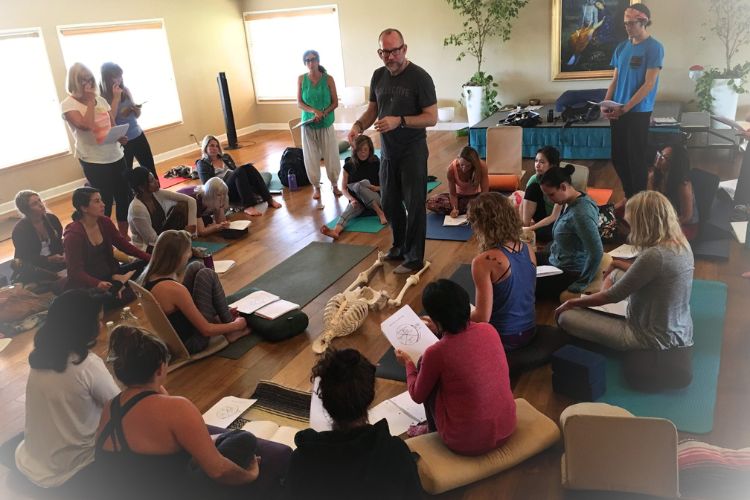
A regular yoga class is usually designed for a group rather than one individual. The teacher leads the room through a shared sequence and may offer variations for different levels. Students are often there for exercise, flexibility, stress relief, self-care, or community.
Even when a class includes asana, pranayama, and meditation, it is still generally broad in structure. The teacher is holding a collective experience, not tailoring every part of the session to one person’s symptoms, history, or functional limitations.
What a Yoga Therapist Does
A yoga therapist uses yoga as a personalized and therapeutic tool for people dealing with specific conditions, symptoms, recovery needs, or long-term patterns affecting health. Rather than leading a generalized class, a yoga therapist usually works one-on-one and builds a plan based on the individual in front of them.
This process often begins with an assessment, health history, and intake form. The therapist may look at movement patterns, breathing habits, stress load, nervous system regulation, pain triggers, lifestyle factors, and the person’s goals. From there, they create a customized plan using yoga techniques such as movement, breathwork, meditation, relaxation, and other practices to support healing and function.
This is the therapeutic application of yoga, not just the teaching of yoga. The intention is not simply to guide a good class. It is to apply yoga in a strategic, individualized way to support physical, mental, emotional, or behavioral health.
Common reasons people seek yoga therapy include chronic pain, injury recovery, anxiety, PTSD, depression, burnout, post-surgery healing, sleep issues, nervous system dysregulation, mobility limitations, and stress-related conditions.
A yoga therapist often gives home practices between sessions and tracks how the client is responding over time.
Training and Certification for Yoga Therapists
A yoga therapist does not start from zero. They begin as a trained yoga teacher, usually with a 200-hour foundation already completed. From there, they continue into extensive additional study, with the professional pathway commonly reaching 1,000 or more total hours.
This includes deeper work in anatomy, pathology, contraindications, adaptation, client assessment, and therapeutic relationship skills. A certified yoga therapist may hold the C-IAYT credential, which is widely seen as the leading professional standard in the field.
Yoga therapy training also includes supervised practical work and case-based learning, helping therapists develop real-world clinical experience rather than staying only in theory.
What a Yoga Therapy Session Looks Like
A yoga therapy session is much more individualized than a class. The first meeting may include a health intake, questions about symptoms and goals, and observation of how the client breathes, moves, rests, and responds. The therapist may ask about medical history, stress patterns, energy, sleep, pain, daily habits, and what has or has not helped before.
From there, the yoga therapist creates a plan that may include gentle movement, breath regulation, relaxation, meditation, guided awareness, and home practice. The work is often paced carefully and adjusted over time based on how the person responds.
This holistic approach can be valuable for people who need more than general wellness support and who do not feel served by a typical yoga class.
Training, Cost, and Credential Comparison
Here is a simple side-by-side look at the two roles:

The Career Pathway From Instructor to Therapist
This path is sequential. A person first becomes a yoga teacher, then continues into yoga therapy training. That means yoga therapy is not a parallel shortcut. It is an advanced professional track built on top of foundational teaching skills.
Many yoga therapists continue to teach classes as well. They may hold both roles, but they use them differently depending on the setting and the needs of the student or client.
Certification Bodies Explained
Yoga teachers are commonly associated with Yoga Alliance credentials such as RYT 200 or RYT 500. Yoga therapists, by contrast, are associated with IAYT and the C-IAYT credential.
These organizations are not interchangeable. One is centered around yoga teacher registration, and the other is centered around the professional standards of yoga therapy.
Choosing Between a Yoga Class and Yoga Therapy
This is where the distinction matters most. People are often not asking for theory. They are trying to decide what kind of support they actually need.
A regular yoga class may be the right fit if you are looking for general fitness, flexibility and strength, stress relief, consistency in movement, community, and support with basic self-care. If you are relatively healthy and can participate in class without aggravating symptoms, a yoga class may be exactly what you need.
Yoga therapy may be the better choice if you are working with chronic pain, injury or post-surgical recovery, anxiety, trauma, depression, fatigue, burnout, mobility limitations, or a condition that makes standard classes feel inaccessible or overwhelming. It is also a wise choice if you have tried yoga before and it did not help, or if group classes leave you flared up, discouraged, or confused.
Not every situation is obvious. Mild back pain may respond well to a skilled yoga teacher who can offer sound modifications. But if the pain lingers, keeps returning, or gets worse in class, yoga therapy is likely the better path.
The same is true for stress. A yoga class can be wonderful for everyday stress management. But when stress moves into panic, trauma, insomnia, or deep nervous system dysregulation, one-on-one support from a yoga therapist may be more appropriate.
Sometimes the issue is not that yoga failed. It is that the format was wrong. A person may not need a different style of class. They may need a therapeutic process designed for their body and life.
Insurance, Cost, and Payment for Yoga Therapy
Cost is one of the most practical questions people ask, and it matters.
A standard yoga class may cost around $15 to $30 for a drop-in, with monthly memberships often ranging from about $100 to $200 depending on location and studio type.
A yoga therapy session is usually more expensive because it is individualized and often much longer or more involved. Initial sessions often range from about $75 to $150, with follow-up sessions commonly falling between $60 and $120. Some practitioners offer package rates for a series of sessions.
Insurance coverage for yoga therapy is still inconsistent. In many cases, yoga therapy is not directly reimbursed as a standalone service. However, there are situations where support may be possible, especially when services are tied to a licensed provider or integrated setting.
Some clients may be able to use HSA or FSA funds, especially when yoga therapy is part of a broader treatment plan and supported by documentation such as a letter of medical necessity. Some practitioners may also provide a superbill that clients can submit to their insurance company for possible out-of-network consideration.
Because policies vary, clients should always check directly with their insurer, HSA, or FSA administrator.
For someone navigating a significant condition, a short series of focused one-on-one sessions can sometimes be more effective than paying month after month for classes that never address the real issue.
Scope of Practice and Professional Boundaries
Yoga therapy lives in an important space. It can be deeply supportive, but it also has clear limits.
Yoga therapists can assess through intake, observation, and movement or breathing patterns, create individualized yoga-based plans, use yoga techniques to support regulation, resilience, function, and symptom relief, work collaboratively alongside healthcare teams, and track progress and adjust the plan over time.
Yoga therapists cannot diagnose medical or psychiatric conditions, prescribe medication, replace a physician, psychotherapist, physical therapist, or other licensed provider, or claim to cure disease through yoga alone.
This distinction protects both clients and professionals. Yoga therapy can be a powerful complement to Western medicine, physical therapy, psychotherapy, and integrative care, but it is not a substitute for licensed medical treatment when that is needed.
Healthcare Integration and the Future of Yoga Therapy
Yoga therapy is becoming more visible in healthcare settings because it gives providers a structured, low-cost, and adaptable way to support whole-person care. As more people seek help for chronic pain, stress-related conditions, trauma, sleep issues, and nervous system dysregulation, yoga therapy is increasingly being recognized as a useful complement to conventional care.
Today, yoga therapists may work in hospitals, VA facilities, rehabilitation centers, outpatient programs, and integrative clinics. Many also work in private practice, both in person and through telehealth. In integrative settings, they may collaborate alongside physicians, physical therapists, psychologists, nurses, and other professionals, using language that can bridge yoga and Western healthcare more clearly.
Research supporting yoga therapy continues to grow, especially in areas like chronic pain, anxiety, PTSD, and stress-related disorders. The field is still evolving, but there is increasing interest in stronger standards, better research design, and clearer professional pathways. Organizations such as IAYT have helped move the profession toward more consistent training and research standards, which supports wider recognition across healthcare environments.
Yoga teachers and yoga therapists both serve through the tools of yoga, but they stand at different places along the wellness spectrum. One offers broad guidance for practice and well-being, while the other offers individualized support for specific needs. The best choice depends on your goals, your health, and the kind of care your body is asking for. If you are looking for a certified yoga therapist, the IAYT therapist directory is a strong place to begin.
Yoga is a vast system that meets people where they are from group classes to therapeutic work. When you understand the difference, you can make a choice that suits you. This discernment is where yoga shifts from something you attend into something that genuinely supports how you live.
FAQs
Can a yoga instructor also be a yoga therapist?
Yes, but only if they have completed additional yoga therapy training beyond standard yoga teacher certification. Every yoga therapist begins as a yoga teacher, yet not every yoga teacher is trained as a therapist. The difference is in the depth of education, assessment skills, and ability to create individualized therapeutic plans for specific conditions.
How long does it take to become a yoga therapist?
It usually takes several years. A person generally begins with a 200-hour yoga teacher training and then completes advanced yoga therapy education, supervised practice, and case-based learning. The full pathway often reaches 1,000 or more total hours, depending on the program and certification route chosen.
Is yoga therapy evidence-based?
Yoga therapy has a growing evidence base, especially in areas such as chronic pain, anxiety, PTSD, and stress-related conditions. While more research is still needed, the field is becoming more established through better training standards, growing clinical interest, and ongoing research efforts that support how yoga can be applied therapeutically.
Can yoga therapy replace physical therapy?
No. Yoga therapy is not a replacement for physical therapy, medical care, or mental health treatment. It can be a powerful complement, especially when supporting pain management, breathing, stress regulation, and functional recovery. But it does not diagnose, prescribe, or replace the work of licensed healthcare professionals.
Do you need a referral to see a yoga therapist?
Usually, no. Many people seek out a yoga therapist directly through private practice or wellness centers without a referral. In some healthcare settings, a provider may recommend yoga therapy as part of a broader care plan. Insurance or reimbursement situations may also affect how someone enters the process.
What conditions can yoga therapy help with?
Yoga therapy may help support people dealing with chronic pain, injury recovery, anxiety, PTSD, burnout, sleep issues, mobility limitations, and stress-related conditions. It can also be useful for people who need a more personalized approach than a standard yoga class can offer. The exact plan depends on the individual.
Turn study into service
Yoga Therapy Certification
Explore a comprehensive path toward becoming a professional yoga therapist.
Explore Yoga Therapy Training